Water Heater Repair, Maintenance & Installation
From sudden cold showers and strange popping noises to active tank leaks and high energy bills, a failing water heater disrupts your entire home. Our licensed master plumbers service and install all major tank and tankless systems—including Rheem, State, A.O. Smith, Bradford White, Navien, and Rinnai—with 24/7 emergency dispatch and guaranteed upfront flat rates.
Don't risk catastrophic tank ruptures or indoor flooding. Our fully stocked service vehicles arrive with replacement elements, thermostats, T&P safety valves, anode rods, and complete replacement units ready for immediate install.
7 Critical Reasons to Call a Plumber for Water Heater Problems
Your water heater works continuously under high temperature and pressure. When performance drops or warning signs appear, attempting DIY repairs on gas lines, high-voltage circuits, or pressurized tanks introduces severe safety hazards. Here is when professional intervention is required:
Complete Lack of Hot Water
If your water runs completely cold, the root cause could range from an extinguished pilot light or defective thermocouple on gas units to burned-out heating elements or tripped high-limit switches on electric systems.
Inadequate Hot Water Supply
Running out of hot water prematurely points to a cracked dip tube (which bypasses cold water directly to your fixtures), an undersized storage tank, or severe mineral sediment occupying 30% or more of your tank capacity.
Popping, Rumbling or Boiling Sounds
Knocking or kettle-like popping noises occur when heavy mineral scale traps water beneath it at the base of the tank. As the burner heats up, trapped water boils into steam pockets that violently burst through the sediment layer.
Active Tank Leaks & Dripping Valves
Water pooling around the base requires immediate inspection. While a weeping temperature-and-pressure (T&P) relief valve can be replaced, water leaking through the steel tank jacket indicates internal rust perforation and requires full replacement.
Rusty, Discolored or Smelly Water
Brown, red, or rotten-egg-scented hot water indicates internal corrosion or sulfate-reducing bacteria reacting with a depleted sacrificial anode rod. Left unaddressed, rust eats through tank steel and ruins fixtures and laundry.
Wild Temperature Fluctuations
Water alternating unpredictably between scalding hot and freezing cold stems from failing thermostats, upper/lower heating element imbalance, or mineral scale insulating the temperature sensors.
Unit Is 10 to 15+ Years Old
Standard storage water heaters are engineered for a 10 to 12-year lifespan. Aging heaters lose up to 40% of their operational efficiency and carry a dramatically heightened risk of catastrophic structural tank rupture.
Manufacturer Warranties Require Documented Annual Maintenance
Major brands (Rheem, A.O. Smith, State, Lennox, Navien) mandate professional yearly inspections and flushing to uphold factory warranty terms. Our documented annual service protects your equipment investment and satisfies homeowner insurance guidelines.
Visual Inspection & Component Diagnostics
Take an inside look at actual plumbing installations serviced and installed by our certified technicians across Colorado communities. Understanding these key components protects your household from unexpected water damage and premature system failure.
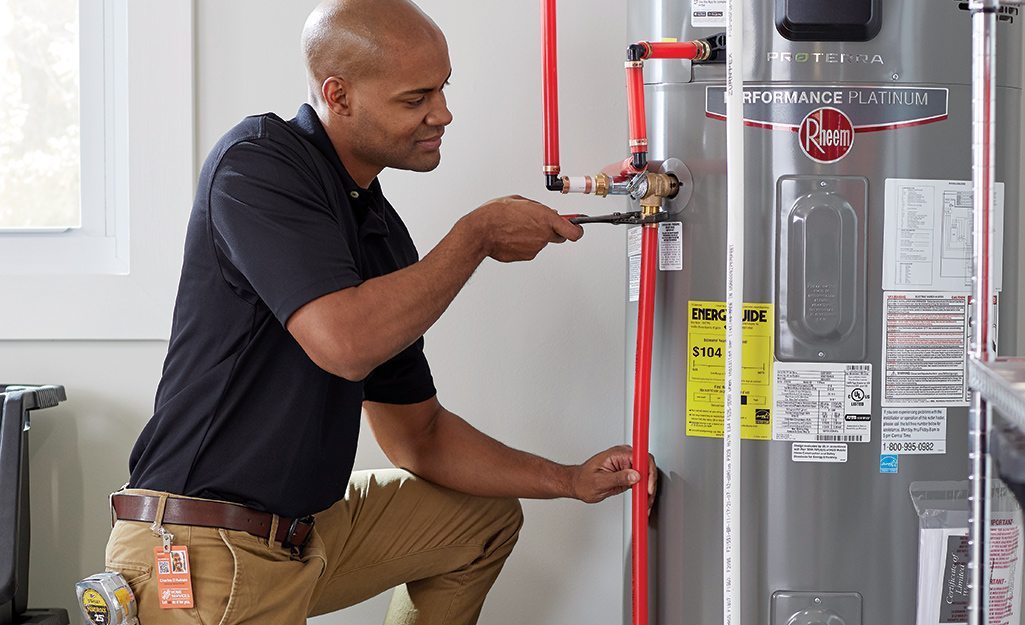
Element, Wiring & Precision Connection Checks
As shown above, routine professional maintenance involves inspecting high-voltage heating element terminals, testing thermostat calibration, and tightening dielectric fittings and PEX lines:
-
1
Sacrificial Anode Rod Protection: Magnesium or aluminum rods attract hard water minerals to corrode themselves instead of your tank steel. Checking and replacing depleted rods prevents premature tank rusting.
-
2
Annual Tank Sediment Flushing: Dissolved minerals settle at the tank floor, insulating elements and causing overheating. Draining and flushing restores original factory heat transfer and thermal efficiency.
-
!
Thermostat Safety Calibration: We set temperatures precisely between 120°F and 125°F to maximize standby energy savings while eliminating dangerous scalding risks.
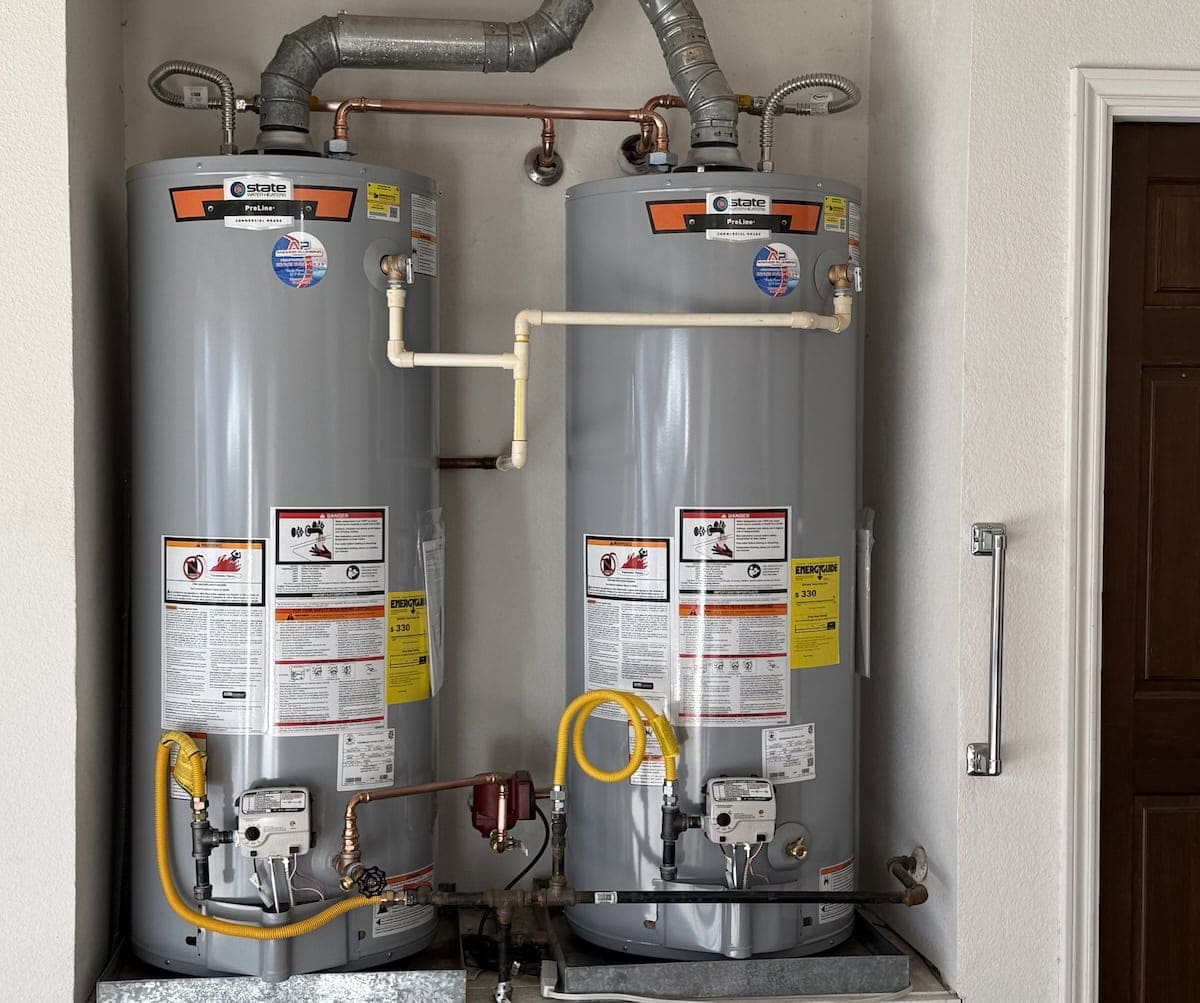
Dual-Tank Systems & High-Demand Gas Capacity
Large homes, multi-bath residences, and commercial facilities frequently require twin-tank parallel piping setups to supply peak simultaneous hot water demands:
-
1
Balanced Parallel Flow: State ProLine commercial-grade tanks piped in tandem equalize water draw, ensuring even wear and doubling total gallons per hour (GPH) recovery rates.
-
2
Dedicated Recirculation Pumps: The central red recirculation pump keeps hot water continually looping through distribution lines for instant hot water at every fixture with zero wait time.
-
✓
Code-Compliant Gas & Flue Venting: Flexible yellow gas supply connectors and precision flue draft hoods ensure complete combustion and prevent hazardous carbon monoxide backdrafts.
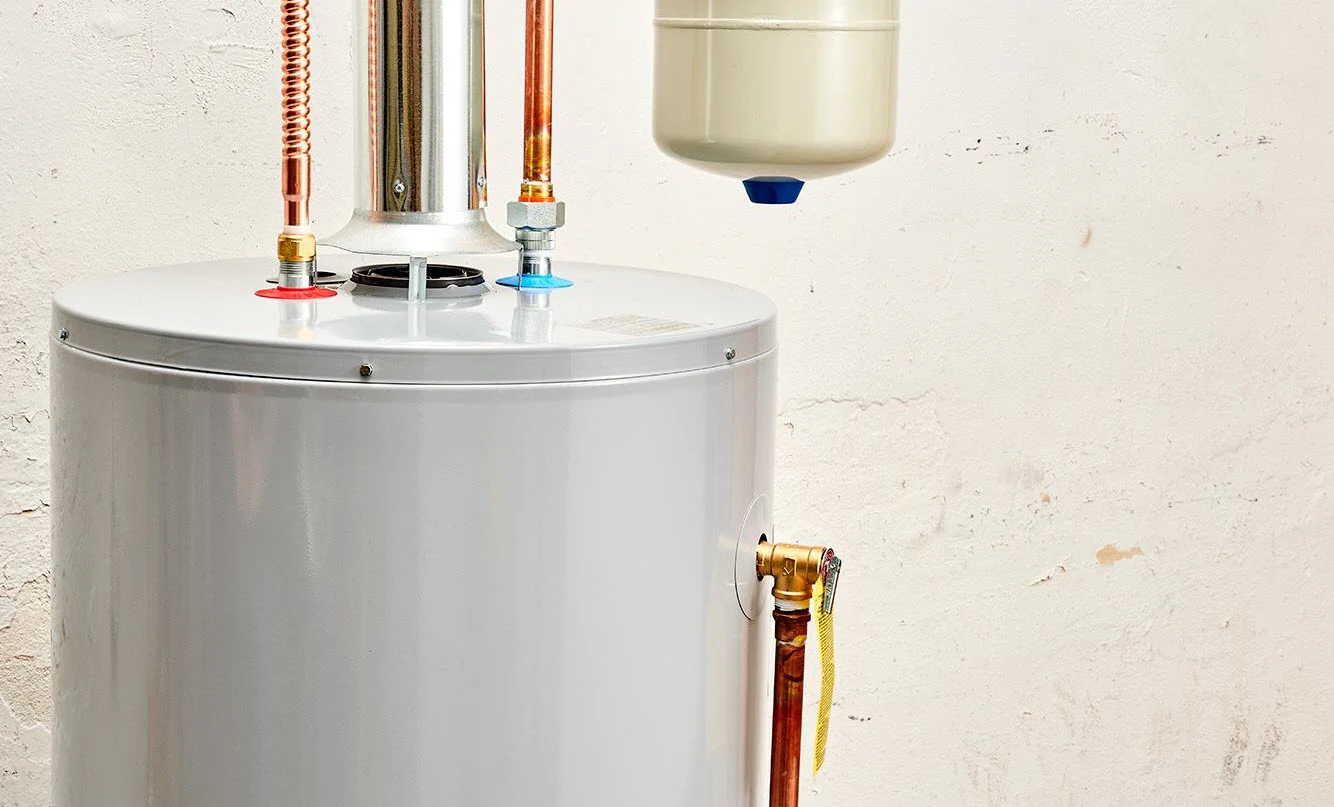
Thermal Expansion Tanks & T&P Relief Valves
Plumbing codes require closed-loop water systems to incorporate thermal expansion safety devices to avoid catastrophic pressure over-pressurization:
-
1
Thermal Expansion Tank (Top Right): As water heats, it expands in volume. In homes with backflow check valves or pressure-reducing valves, this bladder tank absorbs thermal expansion spikes, preventing ruptured tank seams.
-
2
Temperature & Pressure (T&P) Valve: The brass valve on the side opens automatically if tank temperatures exceed 210°F or pressure hits 150 PSI, venting safely down the copper discharge pipe.
-
!
Critical Failure Signs: If your T&P valve is constantly dripping or vibrating, it indicates dangerous excessive internal pressure or valve seat corrosion requiring emergency master plumber evaluation.
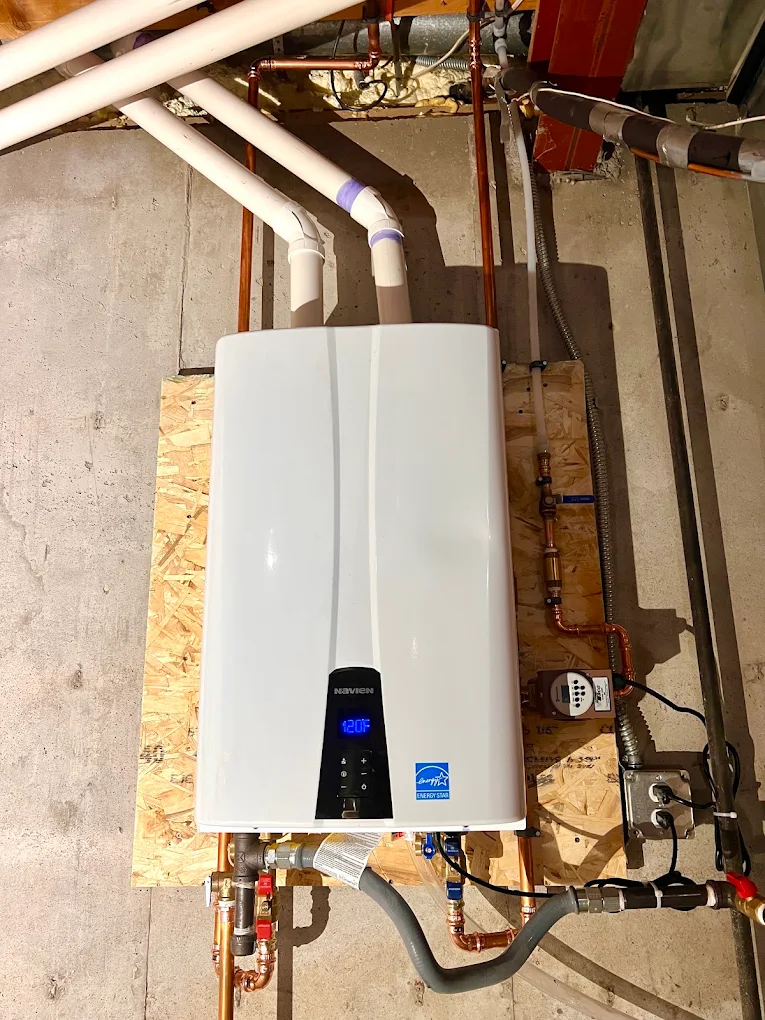
Navien Condensing Tankless & Endless Hot Water
Modern wall-mounted condensing tankless units deliver continuous hot water without standby heat losses, freeing up valuable floor space in basements and utility closets:
-
1
95%+ Thermal Efficiency: Secondary stainless steel condensing heat exchangers capture exhaust heat, dramatically reducing monthly natural gas or propane consumption.
-
2
Isolation Service Valves (Bottom): The red and blue service purge valves allow our plumbers to perform annual vinegar/chemical descaling flushes to keep internal copper coils clear of mineral scale.
-
✓
20+ Year Operational Lifespan: Because tankless units never store standing water, they eliminate catastrophic tank rust-outs and deliver over double the lifespan of traditional storage tanks.
Conventional Storage Tank vs. Tankless Systems
Choosing between a traditional tank and an on-demand tankless water heater depends on your household size, hot water demand, energy goals, and upfront investment budget.
Conventional Storage Tank
Stores 40 to 80 gallons of preheated water continuously at 120°F–140°F, replenishing as water is drawn from household fixtures.
On-Demand Tankless Water Heater
Heats incoming cold water instantly via high-output heat exchangers only when a hot water tap is opened, providing endless hot water.
How Hard Water & Sediment Destroy Water Heaters
In Front Range and Colorado municipal water supplies, dissolved calcium and magnesium minerals precipitate out of solution whenever water reaches 120°F. Over 12 to 24 months, this sediment settles into a dense, rock-hard blanket at the bottom of storage tanks.
1. Element & Tank Overheating
Sediment acts as a thermal barrier between the burner and water. The burner must fire hotter and longer to transfer heat, causing gas tank bottom plates to overheat, distort, and crack the protective glass lining.
2. Sacrificial Anode Rod Depletion
Hard water accelerates galvanic corrosion. Once the sacrificial anode rod is eaten away by mineral activity, corrosive water directly attacks the steel tank body, producing pinhole leaks and red rust water.
3. Dangerous Pressure Build-Up
Mineral scale clogs drain valves and jams the temperature-and-pressure relief valve. Without routine testing, a stuck valve eliminates the primary safety escape for boiling steam, risking tank rupture.
Our 4-Step Water Heater Service Process
Multi-Point Safety & Combustion Inspection
We check gas line integrity, thermocouple voltages, electric heating element continuity, T&P relief valve seals, and test for draft backdrafting and carbon monoxide leaks.
Hydro-Flush & Chemical Descaling
We flush tank storage floors with commercial pump-assisted equipment or circulate specialized descaling solutions through tankless heat exchangers to dissolve hard mineral crust.
Precision Component Repair or Installation
We replace depleted sacrificial anode rods, worn heating elements, faulty thermostats, or execute full same-day code-compliant replacement with new expansion tanks and ball valves.
Pressure, Temperature & Flow Calibration
We calibrate water temperature to 120°F–125°F, test thermal expansion tank air-charge, verify static household water pressure, and document warranty service records.
Water Heater FAQs
Got questions about water heater maintenance, repairs, tankless conversions, or emergency replacement? Here are answers from our licensed master plumbers.
Both major equipment manufacturers and licensed plumbing contractors recommend scheduling professional water heater maintenance once every 12 months. In areas with hard water, high mineral concentrations (calcium and magnesium) accelerate scale accumulation, making annual flushing, anode rod inspections, and T&P safety valve checks essential to prevent premature tank failure and preserve manufacturer warranty coverage.
Loud popping, knocking, or rumbling noises indicate severe mineral sediment accumulation at the bottom of your tank. Water becomes trapped beneath this dense layer of hardened scale and superheats into boiling steam pockets. As the steam violently breaks through the mineral crust, it creates alarming popping and knocking noises. Scheduling a professional tank flush will dissolve the sediment and restore quiet, efficient operation.
A sacrificial anode rod is a magnesium, aluminum, or zinc rod suspended inside your tank that protects the steel body from rusting. Through galvanic action, corrosive minerals in water attack the anode rod rather than the tank walls. Once the rod is fully consumed (typically every 3 to 5 years, or faster in hard water areas), the steel tank begins corroding immediately. Having a plumber inspect and replace the rod extends tank lifespan significantly.
If only your hot water is rusty, it indicates that the interior steel of your water heater is corroding because the sacrificial anode rod has expired. A rotten egg or sulfur smell is caused by sulfate-reducing bacteria reacting with magnesium anodes inside sediment-heavy tanks. Flushing the tank, sanitizing the interior, and replacing the anode rod with an aluminum-zinc alloy will eliminate odors and restore water clarity.
Consider the age of the unit, the cost of repairs, and the nature of the issue. If your water heater is under 8 years old and suffering from an electrical element, thermostat, or T&P valve malfunction, repair is usually the most cost-effective choice. However, if the unit is 10–12+ years old, requires frequent repairs exceeding 50% of replacement cost, or is leaking directly from the tank cylinder, full replacement is safer and prevents catastrophic flooding.
Yes. While tankless water heaters do not store water or require sacrificial anode rods, their compact copper or stainless steel heat exchangers are highly vulnerable to mineral scale. Manufacturers require an annual chemical or vinegar descaling flush using isolation service valves. Descaling removes lime deposits, maintains optimal fuel efficiency, protects sensitive flow sensors, and keeps your 15–25 year warranty active.
Yes. Leading manufacturers—including Rheem, A.O. Smith, State, Lennox, and Navien—stipulate in their warranty terms that equipment must be professionally installed and serviced according to manufacturer instructions. If a tank fails prematurely or an element burns out and you cannot provide maintenance records showing annual servicing, the manufacturer or home warranty provider may deny your claim.
First, immediately shut off the cold water supply valve located on the pipe directly above the water heater (turn the handle 90 degrees or clockwise). Second, shut off the power source: flip the dedicated breaker switch on your electrical panel for electric heaters, or turn the gas control knob to "OFF" for gas heaters. Finally, call our emergency plumbing line immediately for same-day repair or replacement.
When water is heated from 50°F to 120°F, it expands in volume by approximately 2% to 3%. In modern closed plumbing systems with backflow preventers or pressure-reducing valves, this thermal expansion has nowhere to escape, creating dangerous pressure spikes up to 150+ PSI. A thermal expansion tank provides a pressurized rubber bladder cushion that absorbs these surges, protecting plumbing joints, fixtures, and tank seams from rupturing.
We operate 24 hours a day, 7 days a week, 365 days a year with rolling service warehouses stationed throughout the region. For urgent no-hot-water emergencies or active tank leaks, our licensed master plumbers typically arrive on-site within 1 to 2 hours, fully equipped to complete repairs or perform same-day replacement.
Water Heaters by Area
Choose your neighborhood for local 24/7 water heater repair & replacement:
Other Plumbing Services
Complete residential and commercial master plumbing solutions:
Restore Your Hot Water Today
Whether your water heater needs an emergency heating element repair, a complete tank flush, or a brand-new high-efficiency tankless installation, our master plumbers are on standby 24 hours a day. Call now for rapid arrival and upfront pricing.