Whole-Home Water & Gas Lines Repiping & Emergency Repair
Your home's concealed water and gas piping networks form the vital lifelines of modern living—yet aging galvanized steel, leaking copper pinholes, degraded polybutylene, and corroded black iron gas lines jeopardize structural integrity and family safety. Our certified master plumbers deliver non-invasive whole-home PEX and copper repiping, trenchless water service line pulls, and code-certified gas line installations with upfront flat-rate pricing.
Precision Workmanship in Gas & Water Systems
From rigid Schedule 40 black steel gas shut-offs to color-coded PEX-A homerun distribution manifolds and professional mechanical crimp assemblies, examine the components and craftsmanship our master plumbers install:
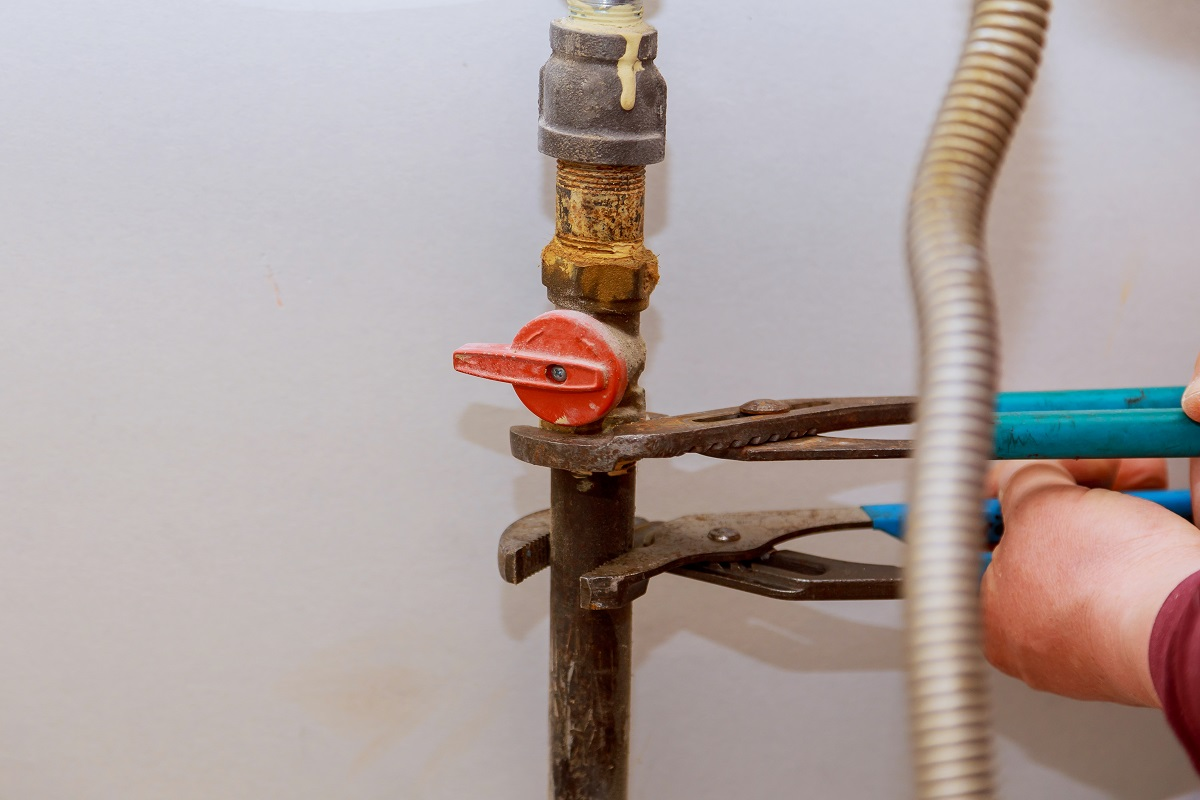
Gas Line Isolation & Valve Assembly
Industrial-grade Schedule 40 black iron gas pipe installation featuring heavy-duty pipe wrenches, brass union couplings, and quarter-turn safety ball valves. We install code-mandated sediment traps (dirt legs) and execute airtight sealants to ensure 100% leak-free supply to furnaces, boilers, and water heaters.
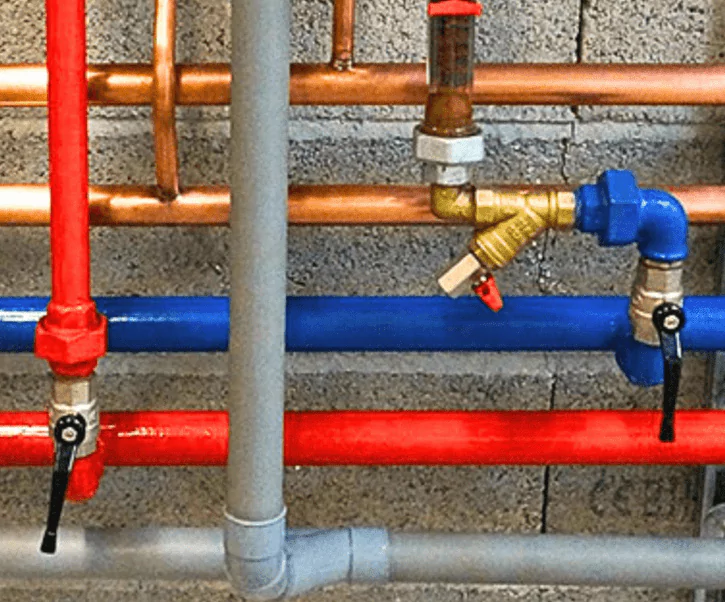
PEX & Copper Manifold Distribution
Advanced multi-zone potable plumbing manifold utilizing color-coded PEX (blue cold, red hot) paired with solid copper trunk lines and inline brass sediment strainers. Dedicated homerun lines eliminate sudden shower temperature drops and allow individual fixture isolation without cutting water to the rest of the home.
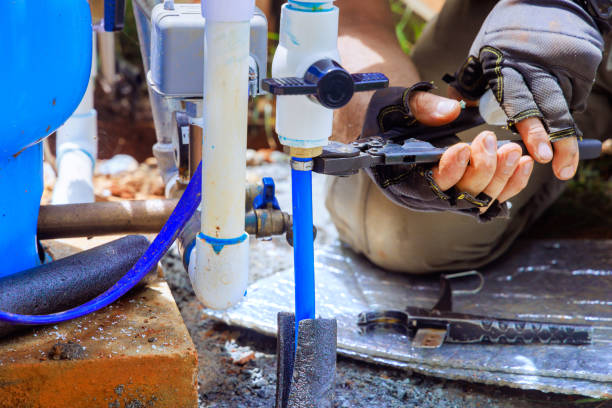
Certified PEX Repiping & Crimping
Certified plumber securing heavy-duty brass mechanical crimp and cold-expansion fittings on blue PEX potable water lines beside a thermal expansion tank. Modern PEX resists freeze rupture, eliminates internal scale calcification, and curves flexibly through wall cavities with minimal drywall cuts.
Complete Water & Gas Piping Capabilities
Whether upgrading an aging 1960s plumbing system or extending natural gas lines for a high-demand tankless water heater, our master technicians handle every phase from engineering sizing calculations to municipal inspections:
Whole-Home Water Repiping
Replace brittle polybutylene, corroded galvanized iron, or pinhole-riddled copper with state-of-the-art PEX-A expansion tubing or rigid Type L copper. Enjoy crystal-clear water, robust water volume at every tap, and complete protection against hidden wall cavity floods.
- ✓ Eliminates brown, rusty, or metallic water
- ✓ Minimally invasive surgical wall access
- ✓ Full turnkey drywall patching options
Gas Line Installation & Extensions
Extend natural gas or propane lines to new appliances including gas ranges, tankless water heaters, high-efficiency furnaces, clothes dryers, backup generators, and outdoor patio fire pits using rigid black iron or yellow CSST flexible tubing.
- ✓ Exact BTU/hr load calculation & pipe sizing
- ✓ Code-mandated CSST electrical bonding
- ✓ Dedicated appliance shutoff valves & flex hoses
Emergency Gas Leak Sniffer Testing
When you detect a rotten egg sulfur odor (mercaptan) or suspect a gas leak, our master gas plumbers deploy electronic combustible gas sniffers and calibrated pressure manometers to locate the source and execute immediate repairs.
- ✓ Rapid 24/7 priority emergency dispatch
- ✓ Bubble surfactant joint testing & sniffing
- ✓ Municipal utility lockout resolution & testing
Main Water Service Line Replacement
Replace leaking, cracked, or corroded underground water service lines running from your municipal street meter or curb stop to your foundation. We deploy trenchless directional boring and pipe pulling to safeguard driveways, trees, and landscaping.
- ✓ Trenchless boring preserves lawns & hardscapes
- ✓ High-density polyethylene (HDPE) & copper
- ✓ Stops unexplained lawn sinkholes & soggy yards
Pressure Reducing Valves (PRV)
High street municipal water pressure exceeding 80 PSI inflicts severe stress on household pipes, causes loud water hammer banging, and ruptures appliance seals. We install and calibrate commercial-grade PRVs to hold domestic pressure at a safe 50-70 PSI.
- ✓ Prevents washing machine & dishwasher valve failure
- ✓ Eliminates hydraulic shock & pipe rattle
- ✓ Integrated pressure gauge monitoring
Manifolds & Main Shut-Off Valves
Replace frozen, corroded gate valves with quarter-turn full-port brass ball valves and modern distribution manifolds. We install smart automatic shut-off systems (such as Flo by Moen) that detect micro-leaks and shut off water automatically to prevent disasters.
- ✓ Smooth quarter-turn emergency isolation
- ✓ Individual branch fixture shut-offs
- ✓ Smart Wi-Fi monitoring and auto-shutoff valves
Differences Between Gas Pipe & Water Pipe Maintenance
While both systems run concealed behind drywall and under floorboards, water and gas lines operate under vastly different physics, materials, safety standards, and diagnostic procedures:
| System Attribute | Water Piping Systems | Gas Piping Systems |
|---|---|---|
| Substance & Fluid State | Potable hydraulic liquid (water) carrying minerals and dissolved oxygen. | Compressible hydrocarbon gas (Natural Gas methane or LP Propane). |
| Operating Line Pressure | High Pressure: Typically 50 to 75 PSI (pounds per square inch). High pressure risks water hammer and joint push-off. | Low Pressure: Typically 0.25 PSI (7″ water column) or 2 PSI hybrid systems regulated at each appliance. |
| Primary Hazard Profile | Structural rot, subfloor collapse, ceiling drywall failure, insulation ruin, and toxic black mold colonization. | Catastrophic explosion, flash fire, asphyxiation, and odorless carbon monoxide (CO) poisoning from incomplete combustion. |
| Diagnostic Equipment Used | Ultrasonic acoustic listening discs, infrared thermal imaging cameras, and inline video scope cameras. | Electronic combustible gas sniffers, certified non-corrosive surfactant bubble solution, and digital manometers. |
| Modern Preferred Materials | PEX-A cold-expansion, PEX-B crimp tubing, and rigid Type L / Type M seamless copper. | Schedule 40 black iron steel, CSST (Corrugated Stainless Steel Tubing), and exterior underground HDPE with tracer wire. |
| Emergency Action Protocol | Turn main shutoff clockwise, open lowest cold faucets to relieve pressure, and call for emergency pipe repair. | Evacuate immediately! Do not flip electrical switches, touch garage openers, or use phones inside. Call from outside. |
Water Line Dynamics & Care
Water lines face continuous chemical and mechanical wear. As water flows through pipes, dissolved minerals precipitate as scale, narrowing pipe diameter. Acidic water or galvanic interaction between dissimilar metals causes pinhole pitting, while excessive municipal pressure (>80 PSI) stresses valves and flex lines.
Key Maintenance Priorities:
- • Annual PRV Testing: Ensure street pressure stays under 70 PSI.
- • Freeze Protection: Insulate vulnerable pipes in crawl spaces & unheated basements.
- • Electrolysis Prevention: Use dielectric unions between copper and steel pipes.
- • Scale Prevention: Install water softeners or whole-home carbon filtration.
Gas Line Dynamics & Care
Because natural gas is invisible and odorless, utilities add mercaptan (a distinctive rotten egg smell). Gas line integrity depends heavily on threaded joint sealants (gas-rated Teflon tape and pipe dope) and tight mechanical unions. Any settling or vibration can loosen threaded fittings, leading to gas seepage.
Key Maintenance Priorities:
- • Manometer Decay Testing: Pressurize lines to 15-30 PSI with zero gauge drop.
- • Sediment Traps (Dirt Legs): Clean out particulate debris before appliance gas valves.
- • CSST Electrical Bonding: Ground flexible stainless lines against lightning arc pinholes.
- • Appliance Connectors: Replace flexible gas connectors whenever replacing an appliance.
Warning Signs Your Lines Need Repair or Repiping
Pipes hidden inside wall studs and beneath concrete floor slabs rarely fail without dropping warning signs. If you notice any of these symptoms, schedule an emergency evaluation:
Rotten Egg Odor or Hissing
A sulfur-like rotten egg odor indicates escaping natural gas or propane. Hissing or whistling noises near gas meters, furnaces, or appliance shut-offs indicate a pressurized joint leak requiring instant evacuation.
Discolored or Rust-Tinged Water
Brown, reddish, or yellow water when running taps signifies internal oxidation and corrosion inside aging galvanized iron piping. The zinc coating has worn away, depositing rust flake debris into drinking water.
Chronic Low Water Pressure
When taking a shower causes faucets elsewhere to dwindle to a trickle, internal mineral calcification or corroded galvanized tuberculation has restricted pipe diameter, choking whole-house flow.
Recurring Pinhole Leaks
If you have had more than two pinhole leaks repaired in your copper or polybutylene piping over the past 24 months, the entire pipe wall has degraded. Patching individual leaks is a losing battle; whole-home repiping is required.
Sudden Spikes in Utility Bills
An unexplained 20% to 50% increase on your water or gas bill without increased household consumption indicates a hidden leak continuously escaping underground, into crawlspaces, or under the slab foundation.
Green Verdigris or Flaking Rust
Visible green chalky crust (verdigris) on copper joints or heavy flaking rust on black iron gas pipes signals advanced exterior oxidation and compromised metal wall thickness nearing structural blowout.
Our 4-Step Repiping & Installation Protocol
Whether executing a full whole-home water line repipe or running custom gas lines for a high-BTU appliance, our licensed technicians adhere to rigorous plumbing and fuel gas mechanical codes:
Diagnostic Scan & Load Sizing
We perform ultrasonic leak scans or manometer tests, measure static water pressure, and calculate exact gas BTU/hr connected loads and pipe run friction before creating a precise layout map.
Surgical Routing & Prep
We protect your floors with drop cloths and isolate work zones. We utilize attic, crawlspace, and small surgical drywall cuts to thread flexible PEX-A or rigid gas pipes with minimal property disruption.
Certified Crimp & Thread Assembly
We install ASTM F1960 cold-expansion PEX fittings, lead-free brass ball valves, sediment dirt legs, and Schedule 40 threaded black pipe with high-temperature gas pipe compound and electrical bonding.
Pressure Testing & Sign-Off
We conduct sustained hydrostatic testing on water lines (100 PSI) and air pressure decay manometer testing on gas lines (15-30 PSI for 15+ minutes), verify zero pressure drop, and issue complete warranties.
Water & Gas Lines, Repiping FAQs
Expert answers from licensed master plumbers on gas safety, whole-home repiping duration, PEX vs copper materials, and city code compliance:
The most common indicator of a natural gas or propane leak is the distinctive sulfur or rotten-egg odor caused by the mercaptan additive. You may also hear a hissing or whistling sound near a gas line or appliance, notice dead vegetation along underground gas pipe routes, or experience dizziness, headaches, or nausea. Immediate Action: Evacuate all occupants and pets immediately! Do not flip any light switches, do not touch electrical outlets or appliances, do not open garage doors, and do not use a phone inside the home, as any electrical spark can ignite the gas. Once safely outside at a distance, call 911, your local gas utility, and our 24/7 emergency dispatch line at 303-309-4144.
A standard residential whole-home repiping project typically takes between 1 and 3 days depending on the square footage, number of bathrooms, and whether the home has a crawlspace, basement, or slab foundation. We design our repiping process so your water is never shut off overnight. We run the new PEX-A or copper supply piping alongside your existing system while it remains active. Water is only shut off for a few hours on the final day when we make the final cross-connections and perform pressure decay testing.
Cross-linked polyethylene (PEX) tubing—specifically PEX-A—has become the premier standard for residential repiping for several reasons: First, PEX is flexible and can be snaked through wall cavities and floor joists with minimal drywall cuts compared to rigid copper pipe. Second, PEX is completely impervious to corrosion, acidic water pitting, and mineral scale buildup. Third, PEX expands slightly if water freezes inside it, making it far more freeze-resilient during harsh Colorado winters. Fourth, PEX installation is faster and more cost-effective while still offering a 25-year manufacturer warranty.
CSST (Corrugated Stainless Steel Tubing) is a flexible, yellow-jacketed gas pipe widely used in modern construction and retrofits because it bends around structural obstacles and reduces threaded joint connections. However, because CSST has thinner walls than rigid Schedule 40 black steel pipe, an electrical surge from a nearby lightning strike can create an electrical arc that punctures the tubing, creating a fire hazard. Modern fuel gas codes strictly require CSST systems to be directly bonded with a heavy copper conductor to the home's electrical grounding system to dissipate electrical charges safely.
Signs of an underground main water line leak between your street curb stop and your foundation include: unexplained spongy, wet, or muddy patches in your lawn even during dry weather; sunken patches of grass or pavement; a sudden and significant increase in your municipal water bill; the sound of rushing water near your basement water meter when no faucets are running; or a sudden drop in household water pressure. We utilize acoustic ground microphones and line tracer sensors to pinpoint the leak without excavating your entire yard.
Galvanized steel pipes (common in pre-1970 homes) corrode from the inside out. As the internal zinc coating erodes, rust accumulates, narrowing the pipe diameter and releasing heavy metals and rust into your drinking water until the pipe wall collapses. Polybutylene ("Quest") pipes (installed between 1978 and 1995) react chemically with municipal disinfectants (chlorine), causing microscopic fractures that lead to sudden, catastrophic pipe bursts. Many insurance carriers will refuse coverage or cancel policies on homes with active polybutylene piping.
A sediment trap (commonly known as a dirt leg) is a vertical capped pipe nipple installed immediately upstream of a gas appliance's control valve, where gas changes direction from vertical to horizontal. Natural gas carries fine dust, scale, moisture, and pipe thread compound. The sediment trap allows these heavy particulates to drop into the capped reservoir before entering the sensitive gas valve or burner assembly. The International Fuel Gas Code (IFGC) mandates sediment traps on all gas appliances with automatic valves (such as water heaters and furnaces).
Ideal residential water pressure is between 50 and 70 PSI (pounds per square inch). If municipal street pressure exceeds 80 PSI, local plumbing codes require a Pressure Reducing Valve (PRV). Excessive pressure stresses pipe joints, ruins toilet fill valves, voids water heater warranties, and accelerates leaks. "Water hammer" is the loud thumping or banging sound heard when a valve closes abruptly (like a washing machine solenoid). It is caused by high-pressure shock waves bouncing off the closed valve and can be eliminated by installing a PRV and water hammer arrestors.
Standard homeowner's insurance policies typically cover the secondary damage caused by a sudden, accidental water leak (such as drywall restoration, carpeting, and subflooring), but they almost always exclude the cost of repairing or replacing the pipe itself due to age-related wear, corrosion, or defective polybutylene. However, many homeowners maintain optional "Service Line Protection" endorsements or utility warranty plans that cover the replacement of underground main water and gas service lines. We provide comprehensive line-item diagnostic reports for insurance claims.
Whole-house water repiping costs depend on home size, number of fixtures, and accessibility (crawlspace vs. slab). A typical single-family home with 2 to 3 bathrooms generally ranges from $4,000 to $9,500 using PEX-A, whereas full copper repiping ranges from $7,500 to $15,000+. Gas line installations or extensions for a single appliance (such as a tankless water heater, stove, or generator) typically range from $650 to $1,800 depending on line length, BTU sizing, and materials (black steel vs. CSST). We provide transparent, upfront flat-rate pricing before any work begins.
Water & Gas Line Repiping in Your Neighborhood
Our mobile master plumbing and gas fitting service trucks carry full PEX repiping coils, Schedule 40 black pipe, CSST fittings, and electronic diagnostic tools for rapid local dispatch:
Protect Your Home & Family Today
Whether you need emergency gas leak isolation, a trenchless main water service replacement, or a complete whole-home PEX repiping upgrade, our licensed master plumbers and gas fitters are available 24/7. Call now for upfront flat-rate pricing and rapid dispatch.