Sewer Line Repair, Replacement & HD Camera Scoping
A compromised sewer main threatens your home with catastrophic blackwater backups, foundation subsidence, and severe structural damage. Shifting and expansive clay soils naturally move over time, producing severe pipe bellies, joint offsets, and sheared lateral lines. Our master plumbing crews deploy high-definition self-leveling sewer cameras, no-dig trenchless pipe bursting, and seamless CIPP epoxy relining to permanently restore your drainage without destroying your mature landscape.
Trenchless vs. Traditional: Choosing the Right Method
Every sewer lateral problem is unique. Rather than pushing a one-size-fits-all sales pitch, our non-commission estimators evaluate your pipe's structural integrity, depth, and yard conditions to recommend the most cost-effective engineering approach:
Trenchless Pipe Bursting
Full Replacement • No Trenching
A conical steel bursting head is pulled through your old clay, cast iron, or Orangeburg pipe, fracturing it outward into surrounding soil while simultaneously pulling a seamless, heavy-duty High-Density Polyethylene (HDPE DR17) pipe directly into place.
- • Eliminates joints where roots penetrate
- • Preserves lawns, mature trees & concrete driveways
- • 100+ year projected pipe lifespan
CIPP Epoxy Pipe Lining
Pipe-Within-A-Pipe • Zero Dig
An epoxy-resin-impregnated felt liner tube is inserted into the host pipe through an existing cleanout, inverted under air pressure, and cured solid. This forms a brand-new, smooth, jointless structural liner that permanently seals fractures and blocks roots.
- • Smooth interior increases flow velocity
- • Seals hairline cracks, pinholes & open seams
- • Cures in hours with zero lawn disruption
Precision Open Trenching
Grade Correction • Collapsed Lines
When a sewer line has completely collapsed, suffered severe negative back-pitch, or has deep low spots ("bellies") caused by shifting expansive soils, open trenching is the only method that allows plumbers to re-grade and re-bed the line with proper 1/4" per foot slope.
- • Corrects improper pitch & eliminates standing bellies
- • Essential for fully collapsed or sheared lateral runs
- • Bedded in crushed stone for long-term stability
How Shifting & Expansive Soils Destroy Sewer Laterals
Many residential properties sit atop heavy concentrations of expansive clay. When moisture levels fluctuate across seasonal freezes, wet cycles, and hot droughts, the surrounding earth swells and shrinks with tremendous force:
Sewer Line Bellies (Sags)
When clay soil under a pipe saturates and settles, a sag develops where wastewater pools rather than draining by gravity. Toilet paper, solids, and grease accumulate in the belly, creating recurrent, stubborn backups that snaking can only temporarily poke through.
Offset Joints & Shears
As ground layers heave upward during freezes, older clay tile and cast iron pipe sections break at the hub connections. These offset joints catch toilet paper and create entry crevices that aggressive tree roots seek out for moisture and nutrients.
Tree Root Infiltration
Even microscopic hair-thin root fibers penetrate mortar joints in vitrified clay pipes. Inside the nutrient-rich sewer flow, roots multiply into dense tree root masses that act as solid dams, cracking pipes open as they expand in diameter.
Channel Rot in Cast Iron
Decades of corrosive sewer gases (hydrogen sulfide) and wastewater flow eat away the bottom of older cast iron sewer pipes, causing the pipe floor to completely rot through. Dirt and gravel collapse into the stream, leading to sudden sinkholes and structural failure.
Sewer Repair & Scoping In the Field
From robotic HD camera scoping through cleanout access points to trenchless CIPP resin lining and under-slab structural excavation, examine how our licensed crews execute complex sewer repairs:
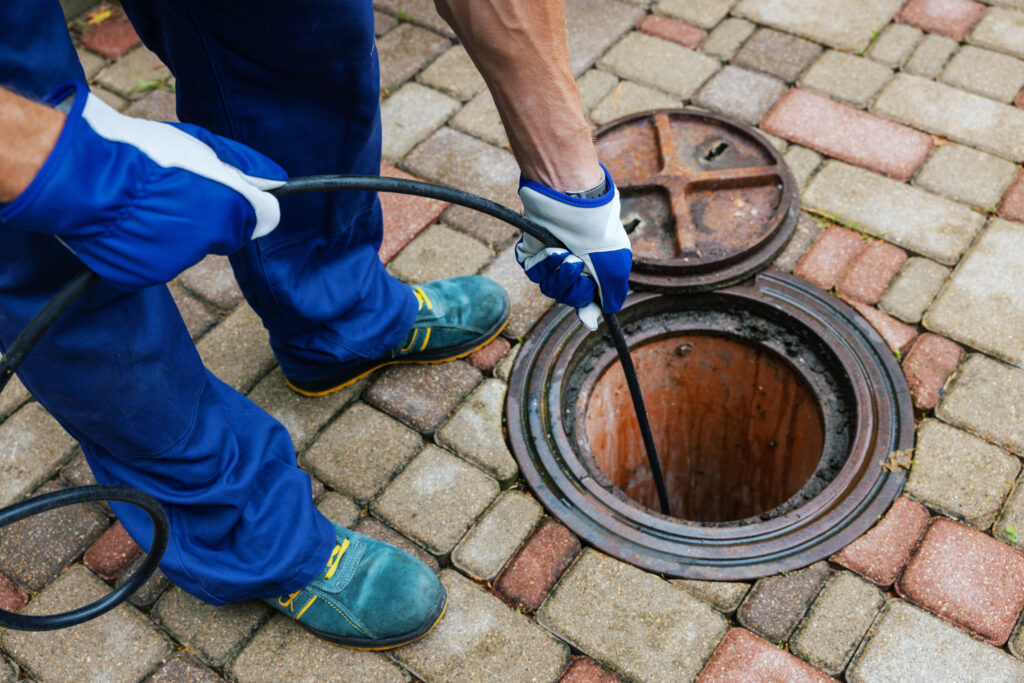
HD Sewer Camera Scoping & Cleanout Access
Our technicians insert self-leveling color fiber-optic cameras equipped with 512Hz electromagnetic sonde transmitters through your main yard cleanout. We record the entire run from foundation to the municipal main to identify root dams, bellies, and shears without digging.
• Exact Depth & Location Mapping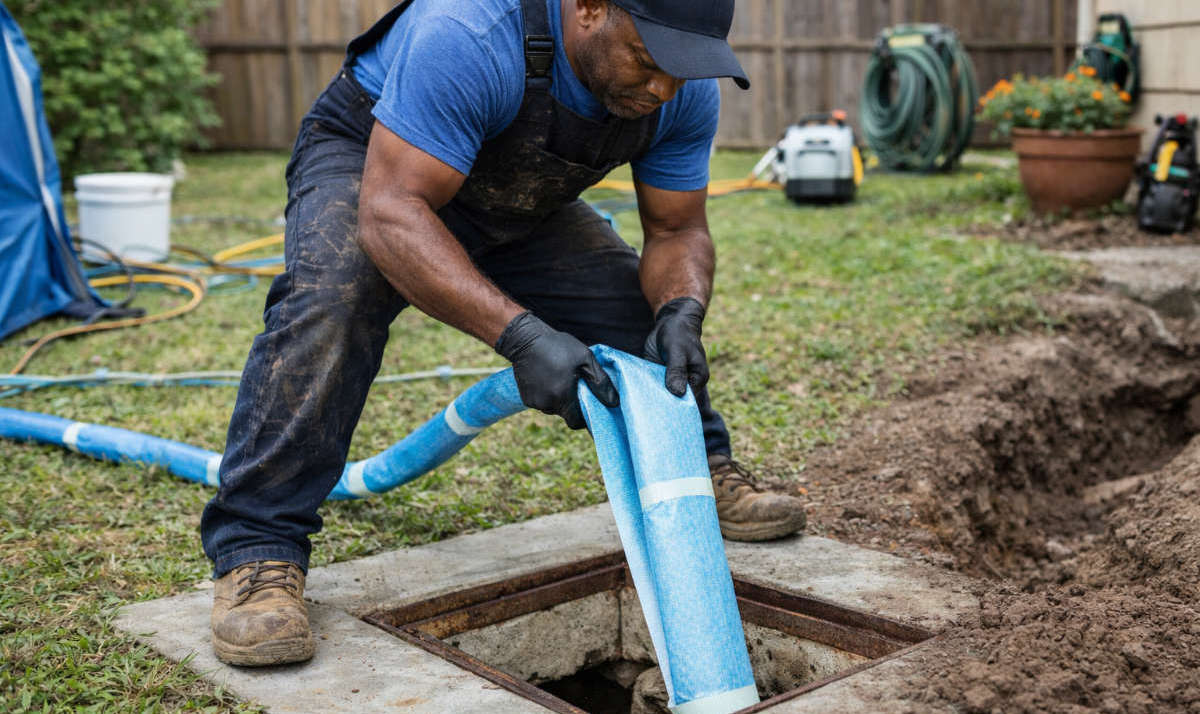
Trenchless CIPP Epoxy Pipe Lining
For cracked, leaking, or root-damaged host pipes that still maintain structural grade, we feed a flexible epoxy-resin felt tube into the lateral. Once pressurized and cured, it creates a seamless, jointless, glass-smooth structural pipe within the old one without excavating lawns.
• 50+ Year Expected Service Lifespan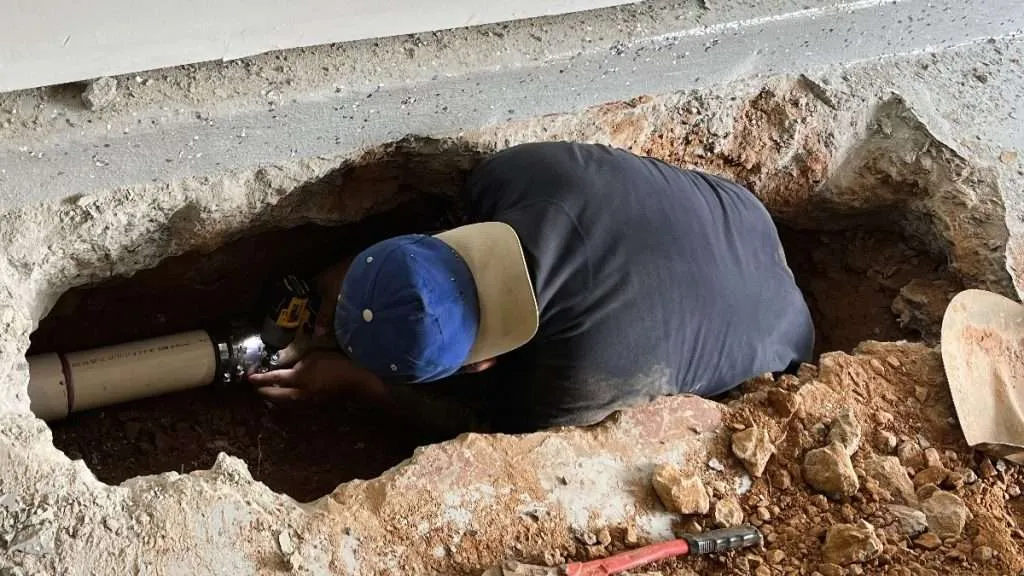
Under-Slab Excavation & Hub Transitions
When interior drainage stacks or main foundation exit hubs fracture beneath basement floors, our crews execute clean, saw-cut slab penetrations. We excavate the failed cast iron and install modern schedule-40 PVC with heavy-duty stainless steel shear-banded couplings.
• Certified Code-Compliant Shear Couplings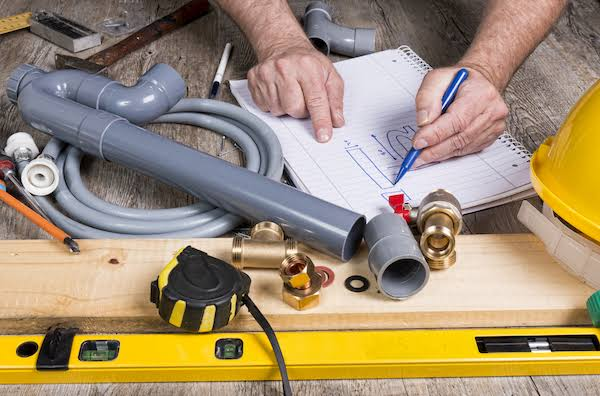
Engineered Lateral Design & Municipal Permits
Sewer lateral replacements require strict engineering oversight to calculate accurate fall (minimum 1/4 inch per foot), manage certified 811 utility locates, pull city right-of-way tap permits, and guarantee flawless drainage slope to the municipal main sewer.
• City Inspection & Permit Compliance6 Signs Your Main Sewer Line Is Failing
A sewer line failure is an emergency that demands immediate professional intervention before raw sewage backups flood your basement and introduce biohazard pathogens:
Multiple Fixtures Backing Up Simultaneously
When a branch drain clogs, a single sink or shower backs up. When the main sewer lateral is blocked, using your washing machine causes wastewater to surge up into basement floor drains, or flushing a toilet forces dirty water into the downstairs shower pan.
Gurgling & Bubbling Sounds from Drains
Gurgling, glugging, or sucking sounds from toilets and sinks after running water indicate that displaced sewer air is trapped behind an obstruction and bubbling past plumbing P-trap water seals.
Persistent Sewer Gas Odors
Sewer lines must be fully airtight. If you smell rotten egg (hydrogen sulfide) odors in your basement, crawl space, or yard, your sewer lateral has a cracked crown, disconnected joint, or rotted vent stack allowing noxious gases into your living space.
Lush, Soggy Green Patches in the Lawn
An isolated patch of grass directly above your buried sewer line that is suspiciously vibrant, lush, or perpetually damp indicates an underground lateral break acting as an unintended subterranean fertilizer.
Sluggish Drains Across the Whole House
If drains throughout the entire home suddenly drain sluggishly despite chemical cleaners and plunging, the bottleneck is situated in the central exterior main sewer lateral rather than inside individual plumbing fixtures.
Foundation Cracks & Paver Sinkholes
Long-term sewage leaks wash away supporting subterranean soil and erode foundation footings. If you observe depressed lawn craters, sinking driveway pavers, or basement floor slab cracking, an underground pipe collapse is active.
Our 4-Step Sewer Scope & Restoration Process
We never guess what lies underground. Our master technicians follow a transparent, rigorous engineering workflow to restore your line with maximum longevity:
HD Camera Scoping
We feed a high-definition color camera through your cleanout to inspect the entire run, measuring exact footage, depth, and identifying roots, sags, or fractures on video.
Non-Commission Estimate
Our estimators don't work on commission. We walk you through the video inspection footage, explain your trenchless vs. excavation options, and provide guaranteed upfront flat pricing.
Trenchless or Dig Repair
Our in-house crew executes pipe bursting, CIPP epoxy lining, or surgical open-trench excavation using our own excavators and certified pipe fusion equipment.
Final Scope & Warranty
We run a post-installation video scope to verify flawless flow and proper pitch, file city permit sign-offs, and issue your 5-year transferable warranty.
Sewer Line Repair & Scoping FAQs
Expert answers from licensed master plumbers on trenchless technology, shifting soil challenges, permitting, and costs:
A sewer scope inspection involves sending a specialized, self-leveling fiber-optic video camera through your sewer lateral from the cleanout out to the municipal sewer main. The camera transmits real-time high-definition video of the pipe's internal condition. It is essential because it reveals the exact location and severity of tree root intrusions, pipe bellies (sags), cracked clay joints, channel rot, and foreign blockages without having to dig up your yard.
Trenchless sewer repair allows plumbers to replace or rehabilitate underground sewer pipes without digging a continuous open trench across your yard, driveway, or patio. The two primary methods are Pipe Bursting (where a hydraulic cone fractures the old pipe outward while dragging a seamless HDPE pipe into place) and CIPP Epoxy Lining (where an epoxy-saturated felt sleeve is cured inside the existing pipe to create a jointless, root-proof pipe-within-a-pipe).
No. While trenchless methods work for the majority of cracked, root-damaged, or deteriorating pipes, they cannot correct pipes with severe negative pitch or major bellies (sags) caused by shifting expansive soils. If a pipe has completely collapsed or has standing water due to soil settling, traditional open-trench excavation is required to regrade the ground to a code-compliant slope of 1/4 inch per foot.
Expansive clay soils dramatically expand when wet and contract when dry. This continuous subterranean movement exerts enormous hydraulic pressure on buried sewer laterals, causing joints to shift, separate, and develop low spots (bellies). Additionally, older neighborhoods often have vintage clay tile or cast iron lines that are reaching the end of their 50-year structural lifespan.
A sewer belly is a sagging section of underground pipe where wastewater pools because the pipe has lost its downward gravity pitch. While mechanical snaking or hydro jetting can temporarily poke a hole through the paper and solids sitting in the belly, the standing pool remains. Over time, solids will continue settling in the sag, leading to chronic backups until the section is excavated and properly regraded.
In nearly all municipalities, the homeowner is entirely responsible for the entire sewer lateral running from the house all the way to the connection tap at the city's main sewer line, including the portion that runs beneath the public sidewalk and street right-of-way. This is why having licensed plumbers experienced with municipal tap permits and street cuts is critical.
Sewer repair costs depend on the length of the run, depth of the pipe, surface obstacles (such as concrete driveways, trees, or street access), and whether trenchless or excavation methods are chosen. Minor spot repairs can range from $2,500 to $4,500, while complete lateral replacements typically range from $7,000 to $15,000+. We provide free, transparent, non-commission estimates based on your HD camera scope footage.
Standard homeowners insurance policies usually exclude wear-and-tear, age-related deterioration, and tree root damage to exterior sewer lines, though they often cover interior water damage from a sudden backup if you have a sewer backup endorsement. However, many utility providers and insurance carriers offer optional "Service Line Protection" riders that cover underground lateral repairs.
Most residential trenchless pipe bursting or CIPP lining projects are completed in just 1 to 2 days, with water service being shut off for only a matter of hours during the actual pull or cure. Traditional open-trench excavations involving public street cuts or extensive concrete restoration may take 2 to 4 days.
First, immediately stop running all water inside your home—do not flush toilets, run dishwashers, or take showers, as every drop of water used will surge out of the lowest drain (typically a basement floor drain or shower). Second, keep children and pets away from standing sewage, which contains hazardous bacteria. Third, call our 24/7 emergency dispatch line at 303-309-4144 for prompt intervention.
Sewer Line Repair & Replacement in Your Neighborhood
Our heavy excavation and trenchless sewer response teams serve homeowners and businesses across the local service area with rapid local dispatch: