Burst & Frozen Pipe Repair & Safe Thermal Thawing
When winter temperatures plummet below freezing, water inside uninsulated pipes expands by approximately 9%, generating extreme hydraulic pressure exceeding 3,000 PSI that violently splits copper, PEX, and galvanized water lines. When thawed, a single fractured pipe can release hundreds of gallons of water per hour into your living space. Our licensed emergency plumbers arrive equipped with safe, flame-free electronic pipe thawers, Type L copper, and heavy-duty fittings to halt flooding and restore potable water immediately.
What to Do Immediately When A Pipe Freezes or Bursts
Every second counts when pressurized water breaches plumbing lines. Follow these immediate emergency steps before our technician arrives on site to minimize structural water damage:
Shut Off Main Water
Immediately locate your main water shutoff valve (typically in the basement, utility closet, or water meter pit) and turn it completely clockwise or perpendicular to the pipe to halt water flow.
Cut Power Near Water
If spraying water is near electrical panels, wall outlets, appliances, or ceiling light fixtures, immediately switch off electricity at the main breaker box to eliminate electrocution hazards.
Relieve Line Pressure
Open the highest and lowest faucets in your home (both hot and cold sides). This drains standing water from the vertical risers and relieves dangerous trapped hydraulic pressure.
Call 24/7 Plumber
Call our emergency dispatch line at 303-309-4144. Take rapid timestamped photos and video of the breach and any standing water to provide clear documentation for your insurance provider.
Why Pipes Burst & Why DIY Thawing Is Dangerous
Understanding the mechanical physics of winter pipe ruptures reveals why attempting amateur thawing methods frequently triggers devastating structural fires or instant pipe explosions:
The 3,000 PSI Pressure Trap
Contrary to common belief, pipes rarely burst at the exact location where ice forms. As ice expands inside the pipe, it acts like an immovable plug. Water trapped between this ice dam and a closed household faucet cannot compress. The trapped hydraulic pressure skyrockets to over 3,000 PSI, causing the pipe wall to rupture downstream at its weakest point.
The Extreme Danger of Blowtorches
Never use an open-flame propane torch to thaw frozen pipes. Applying direct intense heat to frozen metal causes rapid boiling within an enclosed space, resulting in dangerous steam explosions. Furthermore, open flames ignite dry wall studs, insulation backing, and wood framing within seconds behind concealed drywall cavities.
Thermal Shock & Brittle Cracking
Sub-zero temperatures make copper and PVC brittle. Blasting frozen pipes with localized high-heat sources causes severe differential thermal expansion (thermal shock), cracking soldered joints and tearing pinhole fissures that flood your walls the moment water flow resumes.
Professional Controlled Thawing
Our licensed plumbers use specialized low-voltage electric pipe thawers, hot water recirculation units, and thermostatically regulated thermal wraps. We monitor line temperature continuously from the open faucet back toward the freeze to safely melt the ice core without damaging pipe walls.
Sub-Zero Freezing & Precision Pipe Reconstruction
From external building piping frozen solid during winter cold snaps to benchtop copper reconstruction and sweat soldering, see how our master technicians tackle severe freeze emergencies:
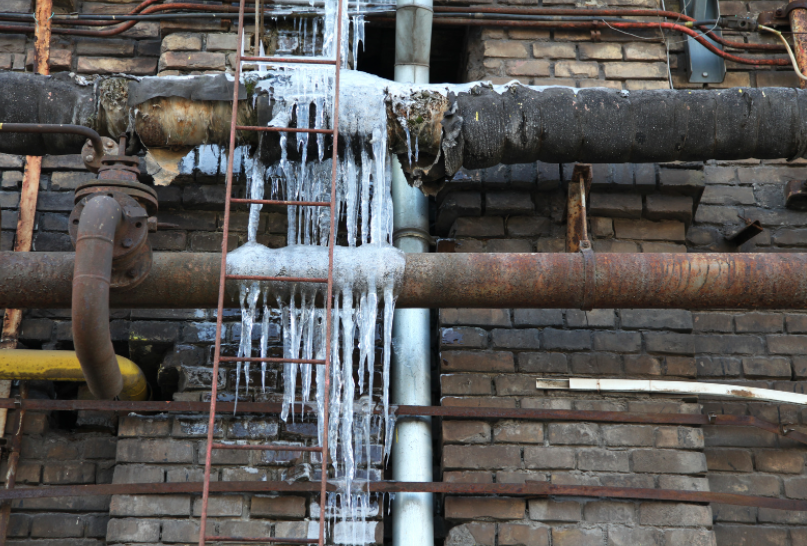
Exterior Freezing & Massive Icicle Formations
Plumbing lines routed through exterior walls, unheated brick chaseways, or outdoor utility runs are exceptionally vulnerable when ambient temperatures drop below 20°F. Water freezes solid into dense ice cores, expanding outward and ripping seams along pipes and control valves.
- • Extreme hydraulic expansion across exterior runs
- • Demands immediate line isolation before thaw
- • Requires heavy-duty closed-cell thermal insulation
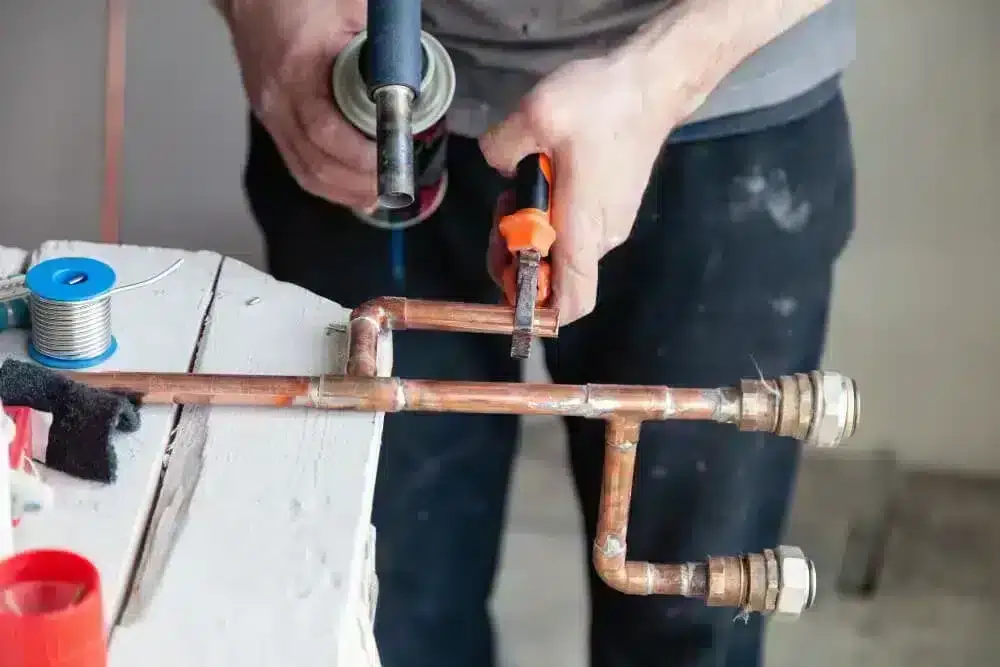
Copper Line Rebuilding & Sweat Soldering
Once a split pipe section is excised, our licensed technicians rebuild the assembly using commercial-grade Type L rigid copper, brass union couplings, and lead-free solder. Where open flame is prohibited inside finished drywall cavities, we deploy hydraulic ProPress fittings.
- • Seamless Type L copper & brass transitions
- • Flame-free ProPress crimping inside wall cavities
- • Calibrated pressure decay testing post-repair
6 Signs You Have a Frozen Water Pipe
Recognizing a frozen pipe before it splits can save tens of thousands of dollars in water mitigation and mold remediation. Watch for these crucial warning signs during sub-freezing weather:
Trickling or Zero Water Flow
Turning on a faucet during a cold snap and receiving only a weak trickle or total silence is the hallmark indicator that an ice blockage has completely sealed off that supply line.
Visible Frost on Exposed Piping
Inspect water lines in unheated basements, crawl spaces, and under sink cabinets. If you see white frost crystals or moisture condensation coating the outside of the pipe, the water inside is frozen.
Banging, Clanging or Whistling
Turning on taps and hearing alarming banging, thumping, or high-pitched whistling sounds indicates trapped air and steam pockets fighting against an ice plug under extreme pressure.
Foul Odors from Drains or Sinks
When plumbing vent pipes or drainage P-traps freeze on cold exterior walls or roof penetrations, sewer gases cannot vent outside and are forced back up into your bathrooms and kitchen.
Visible Pipe Bulging or Seam Splits
As water freezes into solid ice, copper and galvanized pipes often deform and visibly bulge outward. If you observe any swelling, hair-line cracks, or weeping seams, a burst is imminent.
Damp Drywall & Water Rings
As outdoor temperatures warm slightly or your furnace cycles on, frozen pipes begin to thaw. If water rings, soft drywall spots, or ceiling drips suddenly appear, the pipe has already ruptured.
Our 4-Step Frozen Pipe Restoration Process
We never risk your property with open flames or careless demolition. Our certified plumbers follow a proven, methodical workflow to thaw and repair your plumbing safely:
Isolation & Scoping
We isolate the affected plumbing circuit, inspect for structural fissures, and use infrared thermal cameras to map the exact freeze boundaries inside wall cavities.
Safe Electronic Thaw
Using low-voltage electronic pipe thawers and thermostatic heating mats, we safely melt the ice core from the open tap inward without generating fire hazards or steam shocks.
Section Reconstruction
If pipes are split or warped, we surgically cut out the damaged segment and install new Type L copper with ProPress fittings or freeze-resilient PEX piping.
Thermal Protection
We install frost-free hose sillcocks, high-density closed-cell insulation, and self-regulating electric heat trace cables to guarantee your pipes never freeze again.
Burst & Frozen Pipe FAQs
Authoritative guidance from licensed master plumbers on sub-zero emergency response, thawing techniques, insurance claims, and winterization:
While water freezes at 32°F (0°C), residential water pipes typically freeze when outdoor ambient temperatures drop to 20°F (-6°C) or lower for several consecutive hours. Uninsulated pipes located in exterior perimeter walls, unheated crawl spaces, basements, and attics are particularly vulnerable, especially when accompanied by winter wind drafts entering through exterior foundation penetrations.
When water freezes into ice, it expands volumetrically by approximately 9%. As ice forms inside a pipe, it creates a solid blockage that acts like an immovable seal. Water trapped between this ice plug and the closed household faucet cannot compress. As ice continues to expand, hydraulic pressure inside the confined pipe skyrockets to over 3,000 PSI, causing the pipe wall to split open downstream at its weakest point.
Using an open flame propane or butane torch to thaw pipes is extremely hazardous and one of the leading causes of winter house fires. The direct flame can ignite dry wood studs, paper-faced insulation, and wiring inside wall cavities within seconds. Additionally, applying intense localized heat can boil trapped water into pressurized steam, triggering a violent pipe explosion or causing thermal shock that shatters brittle copper and PVC.
A frost-free sillcock is a specialized outdoor faucet designed with an extended 8-to-14-inch valve stem that places the actual water shut-off mechanism deep inside the heated envelope of your home rather than on the freezing exterior wall. When the faucet is shut off, residual water drains out automatically, preventing exterior hose bib freeze-ups. However, garden hoses must be disconnected before winter for the auto-drain mechanism to function.
In most standard homeowner insurance policies, sudden and accidental water damage resulting from a burst frozen pipe—including drywall replacement, flooring repair, and professional structural drying—is covered under your dwelling coverage. However, insurance carriers typically require proof that you maintained reasonable heat inside the home (minimum 55°F to 60°F). We provide detailed diagnostic receipts and photographic evidence for your insurance adjuster.
Professional plumbers utilize specialized, non-invasive thawing equipment such as low-voltage electronic resistance pipe thawers, hot water recirculation systems, and thermostatically controlled heat wraps. Technicians open the affected faucet and gently apply controlled heat from the open end backward toward the freeze. This allows melted water to escape freely and prevents dangerous steam pressure accumulation.
PEX (cross-linked polyethylene) is significantly more flexible and resilient to freezing than rigid copper, PVC, or galvanized steel because it can expand radially to accommodate ice formation. However, PEX is not completely immune to failure. Extreme or repeated freeze cycles, rigid brass fittings, and crimp ring connections can still crack under excessive hydraulic pressure, making proper pipe insulation essential.
During extreme cold waves, keep your home thermostat set to at least 65°F day and night. Open cabinet doors under kitchen and bathroom sinks to allow warm interior air to circulate around plumbing fixtures. Allow faucets located on exterior walls to maintain a slight, steady trickle of lukewarm water—moving water resists freezing and continuously relieves internal line pressure.
Costs vary depending on accessibility, pipe material, and the extent of freezing. Thawing an accessible frozen pipe typically ranges from $250 to $600. Repairing a burst copper pipe section inside an accessible area averages $400 to $900. Complex repairs involving concealed wall cavities, subfloors, or extensive repiping can range from $1,200 to $3,500+. We provide transparent, upfront flat-rate pricing before beginning any work.
First, shut off the main water supply valve immediately; if the pipe has already developed a hairline fracture inside an ice block, water will not leak until the ice melts. Second, open the affected faucet to relieve pressure. Third, open vanity cabinet doors and warm the room. Finally, call our 24/7 licensed emergency plumbers at 303-309-4144 to professionally thaw the pipe and inspect it for structural cracks before water is restored.
Burst & Frozen Pipe Repair in Your Neighborhood
Our winter emergency plumbing vehicles are equipped with electronic pipe thawers and mobile copper repair tooling for rapid local dispatch: