Sump Pump Services & Certified Backflow Preventer Testing
Protecting your property from groundwater flooding below and safeguarding your municipal drinking supply from hazardous backpressure cross-contamination above are two of plumbing's highest responsibilities. Our licensed master plumbers and certified cross-connection control specialists deliver 24/7 emergency sump pump replacements, dual battery backups, annual differential backflow testing, and precision valve rebuilds with transparent flat-rate pricing.
Precision Field Equipment & Assemblies
From airtight radon-sealed basement sump pits to calibrated 5-valve differential pressure backflow gauges and heavy-duty brass RPZ valves, examine the authentic hardware installed and tested by our licensed technicians:
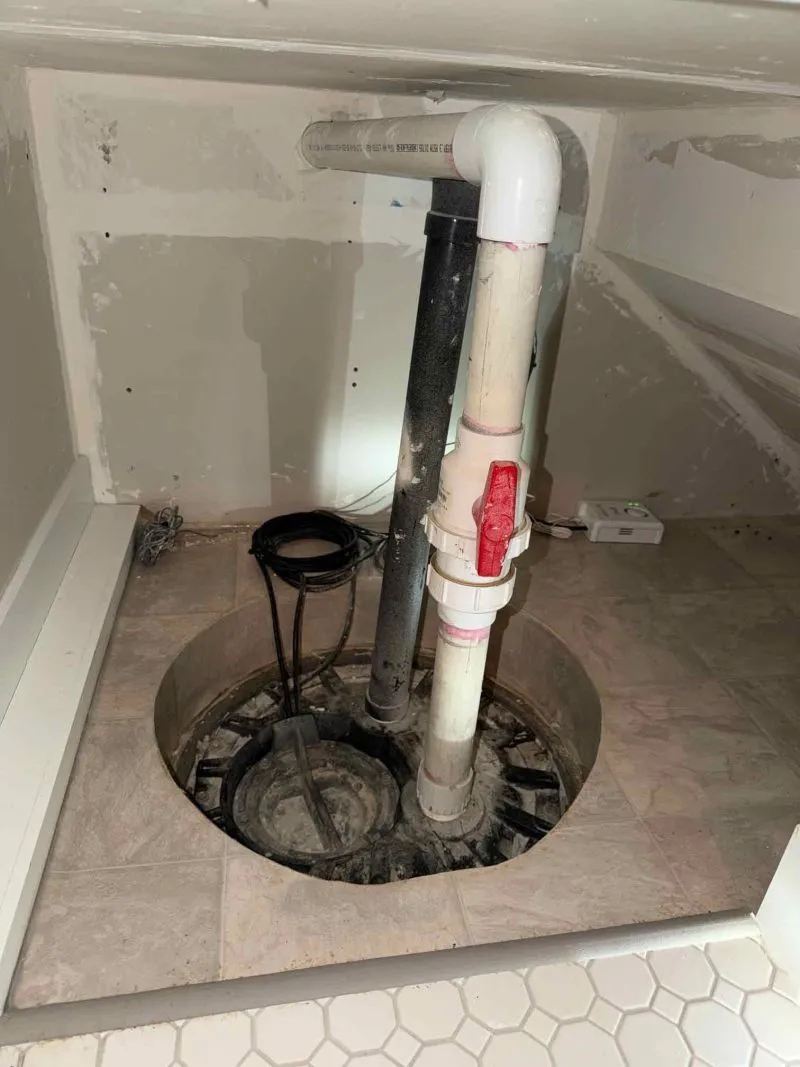
Sealed Sump Pit & Check Valve Assembly
Basement enclosure installation featuring vertical Schedule 40 PVC discharge lines, full-port check valve with red quarter-turn isolation handle, airtight radon mitigation lid, and high-water alarm sensor to prevent subterranean groundwater overflow.
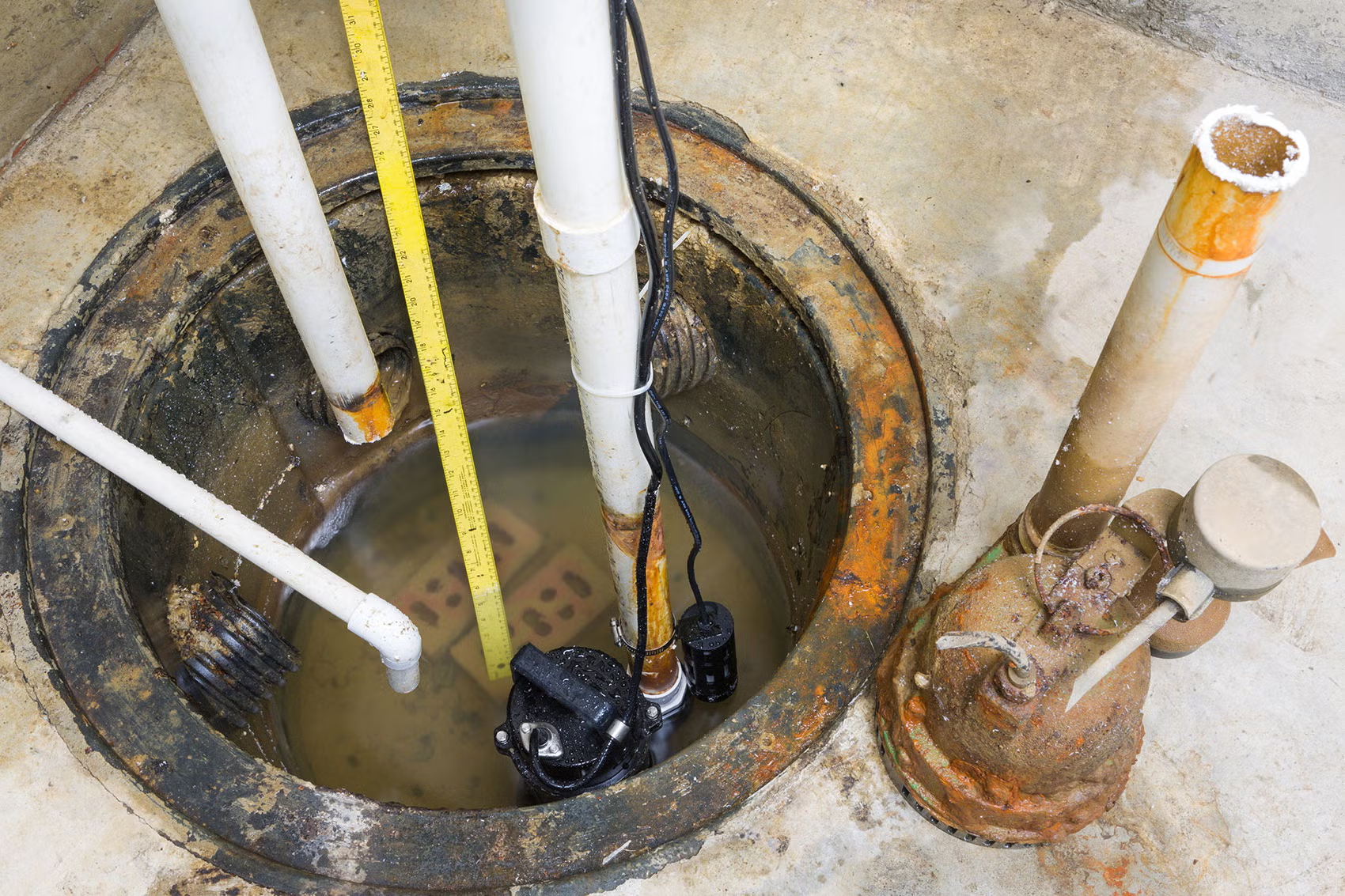
Submersible Basin Pump & Float Replacement
Active basin overhaul featuring depth calibration, perforated French drain inlet conduits, a high-output cast-iron submersible pump with vertical float switch, and an exhausted corroded pump decommissioned beside the pit after motor failure.
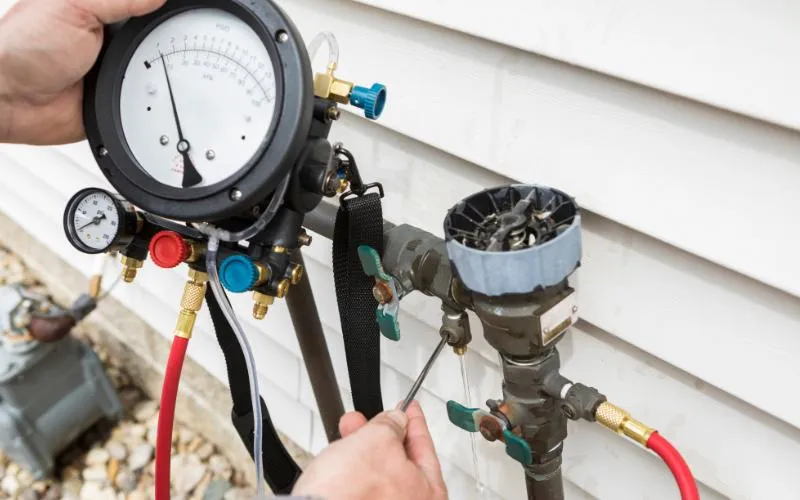
Certified Differential Gauge Backflow Testing
Certified cross-connection technician testing an exterior Pressure Vacuum Breaker (PVB) using a calibrated 5-valve differential pressure test gauge kit to measure check valve seat closure and air inlet opening threshold per municipal health department requirements.
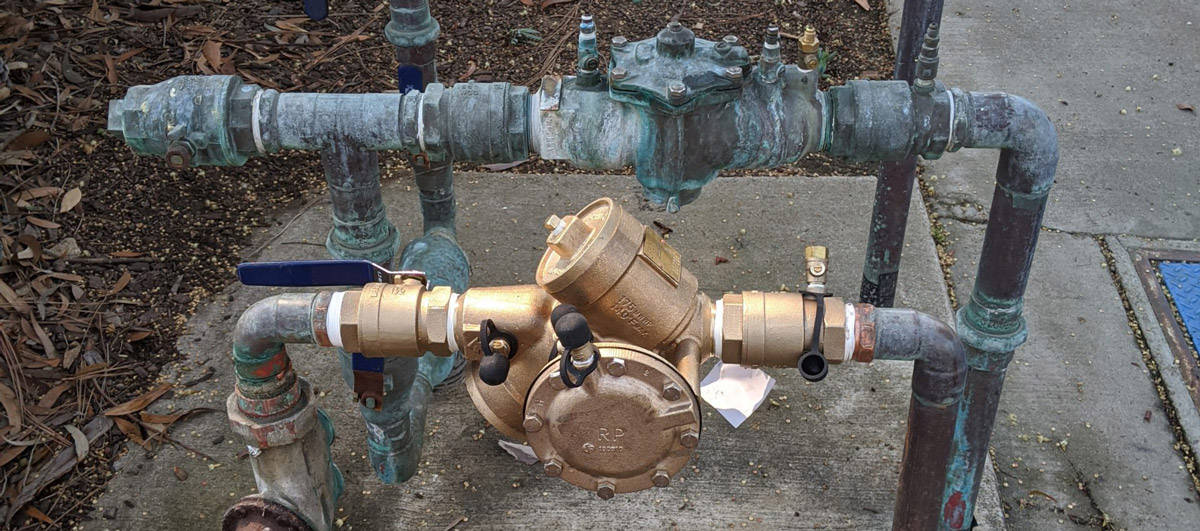
Reduced Pressure Zone (RPZ) Installation
Heavy-duty lead-free brass Reduced Pressure Zone (RPZ) backflow preventer assembly featuring dual spring check valves and a differential pressure relief discharge port, replacing weather-corroded copper pipe to protect the potable drinking water supply.
Comprehensive Sump Pump & Backflow Services
Whether safeguarding a finished basement against spring snowmelt flooding or ensuring an irrigation system complies with municipal drinking water safety regulations, our master plumbers deliver complete mechanical expertise:
Submersible Sump Pump Installation & Repair
Replace failing, noisy, or undersized sump pumps with commercial-grade 1/3, 1/2, or 3/4 HP cast iron submersible pumps engineered to evacuate up to 4,000+ GPH against high vertical head lifts without overheating.
- ✓ Heavy cast-iron motor housing for continuous duty
- ✓ Solid vertical mechanical float switches (non-tangling)
- ✓ Non-clogging cast bronze or vortex impellers
Battery Backup Sump Pump Systems
Severe thunderstorms frequently knock out residential electrical power precisely when groundwater levels peak. Our dual-pump systems incorporate maintenance-free AGM deep-cycle marine batteries and smart chargers for days of uninterrupted run-time.
- ✓ Automatic transfer switches trigger instantly in blackouts
- ✓ Secondary auxiliary pump handles extreme storm surges
- ✓ Audible & Wi-Fi smart mobile smartphone alerts
Certified Annual Backflow Testing & Reporting
Municipal water purveyors mandate annual certified backflow testing on all irrigation, boiler, and commercial potable water connections. Our certified testers evaluate your assembly with precision differential gauges and file all official paperwork directly with your local water district.
- ✓ ASSE & ABPA certified cross-connection testers
- ✓ Same-day test filing with municipal water authorities
- ✓ Prevents water service shut-off notices and fines
Backflow Preventer Repair & Rebuilds
If your backflow device fails annual certification or leaks continuously from its relief vent, total replacement is rarely necessary. We carry genuine manufacturer rebuild kits (Zurn Wilkins, Febco, Watts, Ames) to replace degraded rubber discs, diaphragms, springs, and O-rings on the spot.
- ✓ Check valve seat regrinding & seal replacement
- ✓ Relief valve diaphragm and spring rebuilds
- ✓ Immediate post-repair re-testing and certification
Basement Sump Pit Cleaning & Check Valves
Silt, gravel, iron ochre, and laundry lint accumulate in sump basins, clogging intake screens and causing mechanical burnouts. We extract sediment, drill anti-airlock weep holes, and install spring-loaded silent check valves that eliminate loud pipe slamming.
- ✓ Eliminates water hammer & loud pipe thumping
- ✓ Anti-airlock weep hole inspection & drilling
- ✓ Airtight gasketed covers for radon & odor isolation
Irrigation Backflow Freeze Repair & Blowout
Early autumn or late spring freezes in Colorado routinely crack exterior Pressure Vacuum Breakers (PVBs) and split brass ball valves. We perform emergency freeze repairs, replace cracked bonnets and poppets, and provide comprehensive seasonal air blowout winterization.
- ✓ Emergency replacement of burst brass bodies & bonnets
- ✓ Commercial insulated freeze protection covers
- ✓ High-volume compressed air blowout winterization
Groundwater Evacuation vs. Potable Backflow Control
While sump pump systems evacuate hydrostatic ground pressure away from foundations, backflow preventers maintain a one-way hydraulic barrier preventing non-potable contaminants from reversing into drinking water lines:
| System Attribute | Sump Pump Drainage Systems | Backflow Prevention Assemblies |
|---|---|---|
| Core Operational Purpose | Pumping hydrostatic groundwater out of perimeter weeping tiles to protect basements from flooding. | Preventing reverse flow of contaminated water (fertilizers, chemicals, sewage) into the municipal potable drinking supply. |
| Hydraulic Driving Force | Mechanical centrifugal impeller driven by electric motor (1/3 to 3/4 HP) moving water against gravity. | Dynamic municipal water pressure balancing internal springs and atmospheric relief diaphragms. |
| Key Critical Risk | Float switch hang-up, power loss during storms, or motor burnout causing finished basement ruin and structural mold. | Backsiphonage (negative city pressure) or backpressure contaminating drinking water with toxic chemicals or bacteria. |
| Common Assemblies & Types | Submersible cast-iron pumps, pedestal pumps, 12V AGM battery backups, water-powered backup pumps. | PVB (Pressure Vacuum Breaker), RPZ (Reduced Pressure Zone), DCVA (Double Check Valve Assembly). |
| Maintenance & Testing Frequency | Quarterly float switch testing, annual basin de-silting, 3-year battery backup cycle, 7–10 year pump replacement. | Mandatory annual certified testing using calibrated differential pressure gauges, filed with water provider. |
| Fail-Safe Backup Protection | Dual-pump secondary battery backup system with high-water audible buzzer and Wi-Fi alerts. | Hydraulic differential relief valve discharging water to atmosphere if internal check valves fail. |
Sump Pump Mechanics & Longevity
Groundwater collects around basement footings through perforated drain tiles and flows by gravity into the sump basin. When water reaches a predetermined level, the mechanical float switch closes the electrical circuit, triggering the submersible motor. The vortex impeller forces water up through the vertical discharge pipe, past the one-way check valve, and away from your home's foundation.
Essential Reliability Checklist:
- • Anti-Airlock Weep Hole: Prevents air pockets from trapping water against the impeller.
- • Full-Port Check Valve: Prevents pumped water from draining back and double-cycling the pump.
- • Battery Backup Power: Provides 48+ hours of pumping during severe storm grid outages.
- • Airtight Basin Cover: Seals out radon gas emissions, soil moisture, and insect entry.
Backflow Principles & Legal Compliance
Under normal conditions, water flows under high pressure from the city main into your home. However, if a city water main ruptures or firefighters connect to a nearby hydrant, municipal pressure drops drastically. This creates a powerful vacuum (backsiphonage) that can suck standing fertilizer-laden lawn water, boiler chemicals, or commercial liquids back into the drinking lines without a certified backflow preventer.
Code & Regulatory Mandates:
- • Annual Inspection Mandate: Water districts require certified testing under state health regulations.
- • PVB Elevation Rules: Must sit at least 12 inches above the highest sprinkler head on property.
- • RPZ High-Hazard Shield: Required on boilers, fire systems, and commercial fertilizer injection feeds.
- • Rebuild vs Replace: Worn rubber components are rebuilt using factory-certified OEM kits.
Warning Signs Your Equipment Needs Immediate Service
Sump pumps and backflow valves protect against catastrophic damage—yet mechanical wear, debris fouling, and winter freezing often trigger warning indicators before total failure occurs:
Motor Humming But Not Pumping
An audible hum from the sump basin without water being discharged indicates an airlocked pump, a seized impeller jammed by gravel or debris, or a failed mechanical capacitor. Turn off power immediately to avoid motor burnout.
Constant Cycling or Running Non-Stop
If your pump runs continuously or kicks on every few seconds when no rain is falling, a broken or missing check valve is allowing discharged water to rush right back into the basin, or the float switch is hung up on the basin wall.
Continuous Backflow Relief Port Leaking
A steady stream or spitting of water from an RPZ or PVB relief vent indicates that mineral scale, sand, or a degraded rubber disc is preventing the first check valve from sealing, requiring an internal rebuild.
Discolored or Chemical-Tasting Tap Water
Foul odors, chemical tastes, or murky discoloration from domestic faucets indicate a severe backflow cross-connection event where non-potable water has breached internal seals. Stop drinking immediately and call for emergency testing.
Equipment Exceeding 7–10 Years Old
Even top-tier cast iron submersible pumps suffer mechanical wear and seal degradation after 7 to 10 years of continuous duty. Replacing aging pumps proactively avoids waking up to an inundated finished basement during a storm.
Visible Frost Bulging or Hairline Cracks
Water left inside exterior backflow assemblies expands upon freezing, causing brass bonnets to warp, poppets to shatter, and valve bodies to split. Cracked assemblies must be rebuilt or replaced to restore water service.
Our 4-Step Installation & Certification Protocol
From calculating pump head capacity and basin volume to calibrated 5-valve differential pressure backflow certification, our licensed plumbers execute every step with meticulous precision:
Diagnostics & Hydraulic Sizing
We inspect basin depth, weeping tile flow rate, static vertical head lift, and electrical supply, or connect differential test gauges to evaluate backflow check valve spring tension and relief differential thresholds.
Precision Fitting & Rebuild
We extract failing pumps, clear basin sediment, install heavy-duty cast iron submersibles with non-tangling vertical floats, drill anti-airlock weep holes, or rebuild backflow valves with OEM rubber and spring kits.
Simulated Storm & Pressure Testing
We fill basins to simulate heavy torrential inflow, test primary and secondary battery pumps under full load, verify check valve seal integrity, and perform sustained differential pressure decay testing on backflow cocks.
Official Certification & Sign-Off
We affix official certification test tags to your backflow preventer, file all compliance documentation directly with your city or water district, and provide full warranty coverage on all new pumps and hardware.
Sump Pumps & Backflow FAQs
Expert answers from licensed master plumbers and certified cross-connection control specialists on flood protection, backflow compliance, and system maintenance:
The typical operational lifespan of a residential submersible sump pump is 7 to 10 years, though pumps in areas with persistently high groundwater tables may require replacement within 5 to 7 years. Minor issues—such as a tangled float switch, an airlocked weep hole, a broken check valve, or accumulated basin sediment—can easily be repaired on-site. However, if the electric motor windings have overheated, the internal mechanical shaft seal is leaking oil, or the pump hums without spinning despite receiving full voltage, complete pump replacement with a commercial-grade cast iron unit is the safest, most reliable solution to prevent basement flooding.
Torrential downpours, severe thunderstorms, and spring snowmelts are the most common causes of municipal electrical power grid failures. Unfortunately, this is the exact moment when hydrostatic groundwater levels surge into your basement weeping tiles. Without grid power, a standard 120V AC sump pump is completely useless. A dedicated battery backup system incorporates a separate 12V DC auxiliary pump and heavy-duty marine AGM deep-cycle battery. When grid power drops, an automatic transfer switch engages the backup pump instantly, providing up to 48 to 72 hours of continuous flood defense even during extended blackouts.
A humming sump pump indicates that electric power is successfully reaching the motor, but the mechanical impeller cannot spin or discharge water. Common causes include: 1) Airlock: An air pocket is trapped inside the pump housing beneath the check valve because no relief weep hole was drilled; 2) Jammed Impeller: Gravel, silt, or construction debris has entered the bottom suction screen and physically seized the impeller; 3) Frozen Discharge Pipe: Winter ice has plugged the exterior discharge outlet, preventing water flow; or 4) Failed Run Capacitor: The motor cannot generate starting torque. Turn off the circuit breaker immediately to prevent motor burnout and call our emergency technicians.
Backflow is the dangerous reversal of non-potable water, fertilizers, lawn chemicals, boiler fluids, or bacteria into the public drinking water system. It is triggered by either "backsiphonage" (a severe drop in city main pressure due to a nearby water main break or fire hydrant use) or "backpressure" (when downstream pressure exceeds supply pressure). Because backflow preventers contain moving mechanical rubber check valves and internal springs that degrade from continuous water friction and mineral scale, local water purveyors and state health codes legally mandate that every assembly be tested annually by a certified backflow tester to ensure it holds minimum required opening thresholds.
A Pressure Vacuum Breaker (PVB) consists of an independently acting spring-loaded check valve and an independently acting air inlet valve. PVBs are primarily used on residential lawn irrigation sprinkler systems and protect against backsiphonage only; they must be installed outdoors at least 12 inches above the highest sprinkler head. A Reduced Pressure Zone (RPZ) assembly offers the highest level of health-hazard protection against both backsiphonage and backpressure. An RPZ features two independent check valves separated by a hydraulically operated differential pressure relief valve that automatically discharges water to the atmosphere if either check valve fails. RPZs are required on high-hazard commercial connections, boiler feeds, and chemical systems.
Continuous leaking or spitting from the relief port or bonnet of a backflow preventer is a clear indicator that the internal components are compromised. The most frequent causes are: 1) Debris on the Check Seat: Fine sand, rust flakes, or pipe scale have lodged beneath the rubber check disc, preventing an airtight seal; 2) Degraded Rubber Diaphragm: Mineral calcification or chlorinated city water has warped or torn the flexible rubber disc; 3) Excessive Pressure Fluctuations: Sudden water hammer spikes or thermal expansion from a water heater exceed the spring differential; or 4) Freeze Damage: Frost expansion has distorted the brass valve body. Our certified technicians disassemble the valve, flush the chambers, and install OEM rebuild kits to restore factory performance.
A weep hole (also called an anti-airlock relief hole) is a small 3/16-inch to 1/4-inch hole drilled at a 45-degree downward angle into the PVC discharge pipe, located between the pump discharge collar and the inline check valve inside the basin. When a sump pump empties the basin and shuts off, air enters the discharge pipe. Without a weep hole, rising water in the next cycle traps that pocket of compressed air against the check valve flapper. The pump impeller spins helplessly against the air pocket, humming loudly without moving any water. The weep hole allows trapped air to bleed out cleanly, ensuring instantaneous pumping every cycle.
Because exterior backflow preventers (PVBs) are mounted above ground on outside building walls, they are extremely vulnerable to Colorado cold snaps. To prevent freeze damage: 1) Seasonal Blowout: Shut off the indoor irrigation isolation valve, connect a commercial air compressor, and blow out all remaining water through the sprinkler zones before the first hard freeze; 2) Ball Valve Angle: Leave the test cocks and isolation ball valves set at a 45-degree half-open angle so water cannot become trapped behind the Teflon ball seals; and 3) Insulated Pouches: Install an insulated, waterproof backflow insulation bag or heated enclosure for early autumn or late spring temperature drops.
No. By law, municipal water districts and state environmental health departments require annual testing to be performed exclusively by an ASSE (American Society of Sanitary Engineering) or ABPA (American Backflow Prevention Association) certified cross-connection technician using a calibrated differential test gauge kit. Once tested, official test reports must be signed, stamped, and submitted directly to the city water department. Handymen or non-certified contractors cannot legally certify backflow devices or submit official documentation.
Standard submersible sump pump replacement (including a 1/3 or 1/2 HP commercial cast iron pump, silent check valve, and PVC discharge hookup) typically ranges from $550 to $1,100. Dual battery backup sump systems with deep-cycle AGM batteries range from $1,200 to $2,400 depending on battery amp-hour capacity and monitoring features. Annual backflow certification testing typically costs $85 to $150. Backflow valve rebuilds using genuine factory rubber and spring kits range from $175 to $350, while full replacement of an exterior PVB or indoor RPZ assembly ranges from $450 to $1,200+. We provide upfront, flat-rate pricing before starting any work.
Sump Pump & Backflow Services in Your Neighborhood
Our mobile master plumbing and certified backflow service vehicles carry high-capacity submersible pumps, AGM battery backups, and differential testing gear for rapid local dispatch:
Protect Your Home & Drinking Water Today
Whether you need an emergency basement sump pump replacement, a storm-ready battery backup installation, or certified annual irrigation backflow testing, our licensed master plumbers and certified testers are available 24/7. Call now for upfront flat-rate pricing and rapid local dispatch.