Drain Cleaning & Clog Removal
A clogged drain can quickly turn into a major plumbing emergency. Slow drainage, standing water, unpleasant odors, and recurring backups are common signs that your pipes need professional attention. Our licensed master plumbers use advanced hydro jetting, motorized augers, and video camera inspections to completely restore proper water flow.
Common Drain Problems We Handle
We provide drain cleaning and clog removal for kitchens, bathrooms, laundry areas, basement floors, and whole-house sewer systems. Our plumbers identify the root cause of the blockage and apply the exact solution needed to clear your line safely without damaging your pipes.
Slow-Draining Sinks
Water pooling in bathroom vanities or kitchen basins due to soap scum, toothpaste, and debris.
Completely Blocked Drains
Zero water movement with stubborn standing water that requires heavy-duty mechanical clearing.
Shower & Bathtub Clogs
Dense hair webs and soap scum tangling around the drain grate and deep within the P-trap.
Kitchen Sink Blockages
Heavy food scraps, coffee grounds, and congealed cooking grease constricting the pipe walls.
Toilet Drain Clogs
Severe obstructions caused by foreign objects, non-flushable wipes, and calcified waste.
Floor Drain Backups
Laundry and basement floor drains backing up, indicating a deeper downstream sewer obstruction.
Hair & Soap Buildup
Hair fibers catching on pivot rods and binding with soap scum to form impermeable plugs.
Grease & Food Buildup
Solidified grease coating inner pipe walls, choking a 2-inch pipe down to a pencil-thin trickle.
Recurring Drain Clogs
Clogs returning days after clearing, signaling tree root intrusion or broken sewer piping.
Foul-Smelling Drains
Rotten egg or sewer gas odors escaping through dry P-traps, clogged vents, or decaying organic slime.
Understanding Your Drain System: Where Clogs Hide
Most drain clogs don't happen right at the surface. They develop deep inside mechanical joints, stopper ports, curved water seals, and concealed subfloor branch lines.
The Stopper Port & P-Trap Assembly
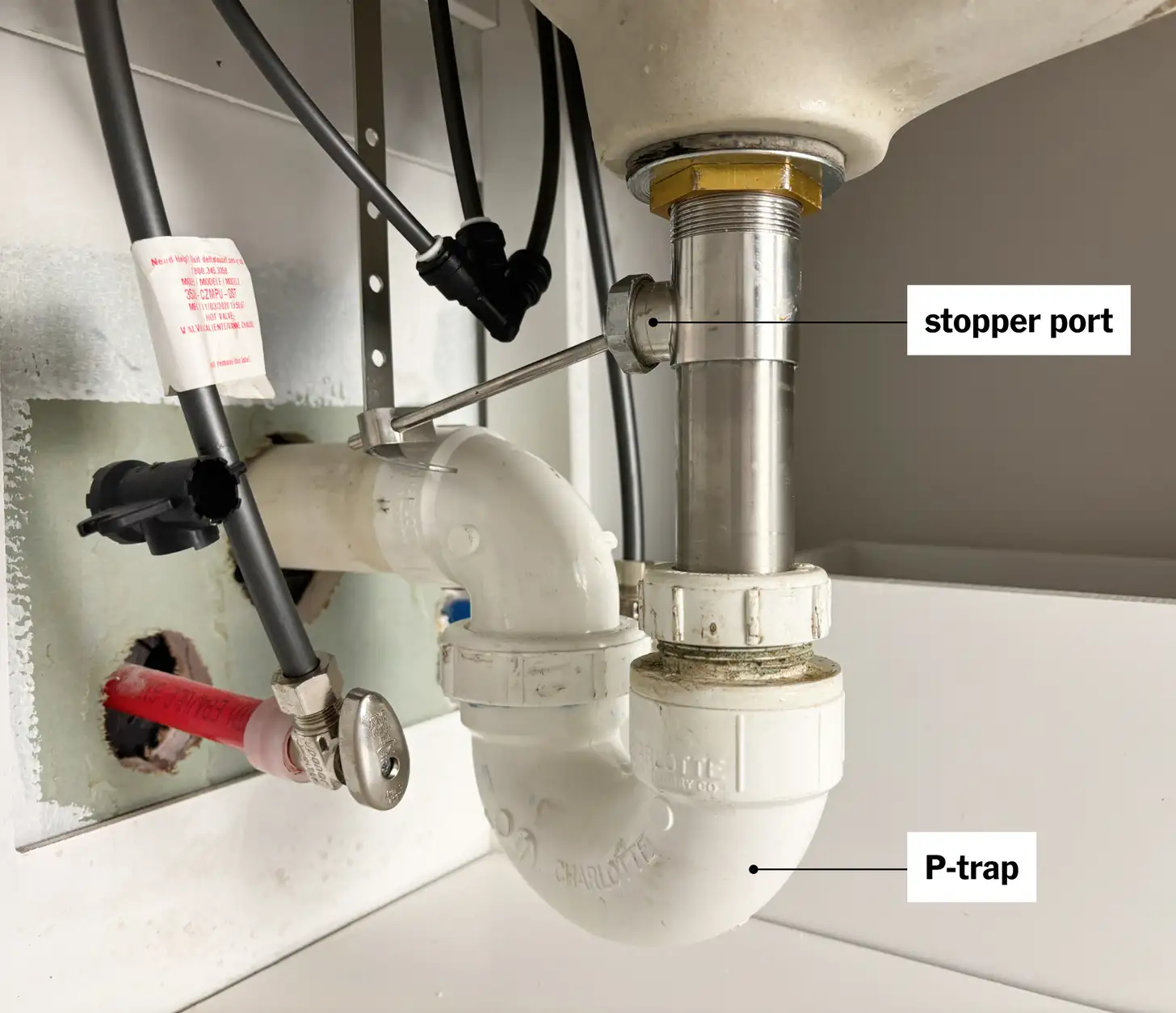
The diagram above highlights the two most vulnerable points in any sink plumbing setup:
-
1
Stopper Port (Pivot Rod): The horizontal mechanical rod that opens and closes your pop-up drain is the #1 place where hair, dental floss, and soap scum tangle. Over time, it creates a stubborn web that catches passing debris.
-
2
The P-Trap (Water Seal): The curved pipe retains water at all times to prevent hazardous, foul-smelling sewer gases from entering your home. However, gravity causes heavy sediment, grease, and dropped jewelry to settle right at the bottom curve.
-
!
Why Chemical Cleaners Fail: Pouring caustic chemicals sits inside the P-trap, eating away at slip-nut gaskets, PEX water line fittings, and metal threads without breaking through thick mechanical blockages.
Complex Waste Tees & Subfloor Drainage Lines
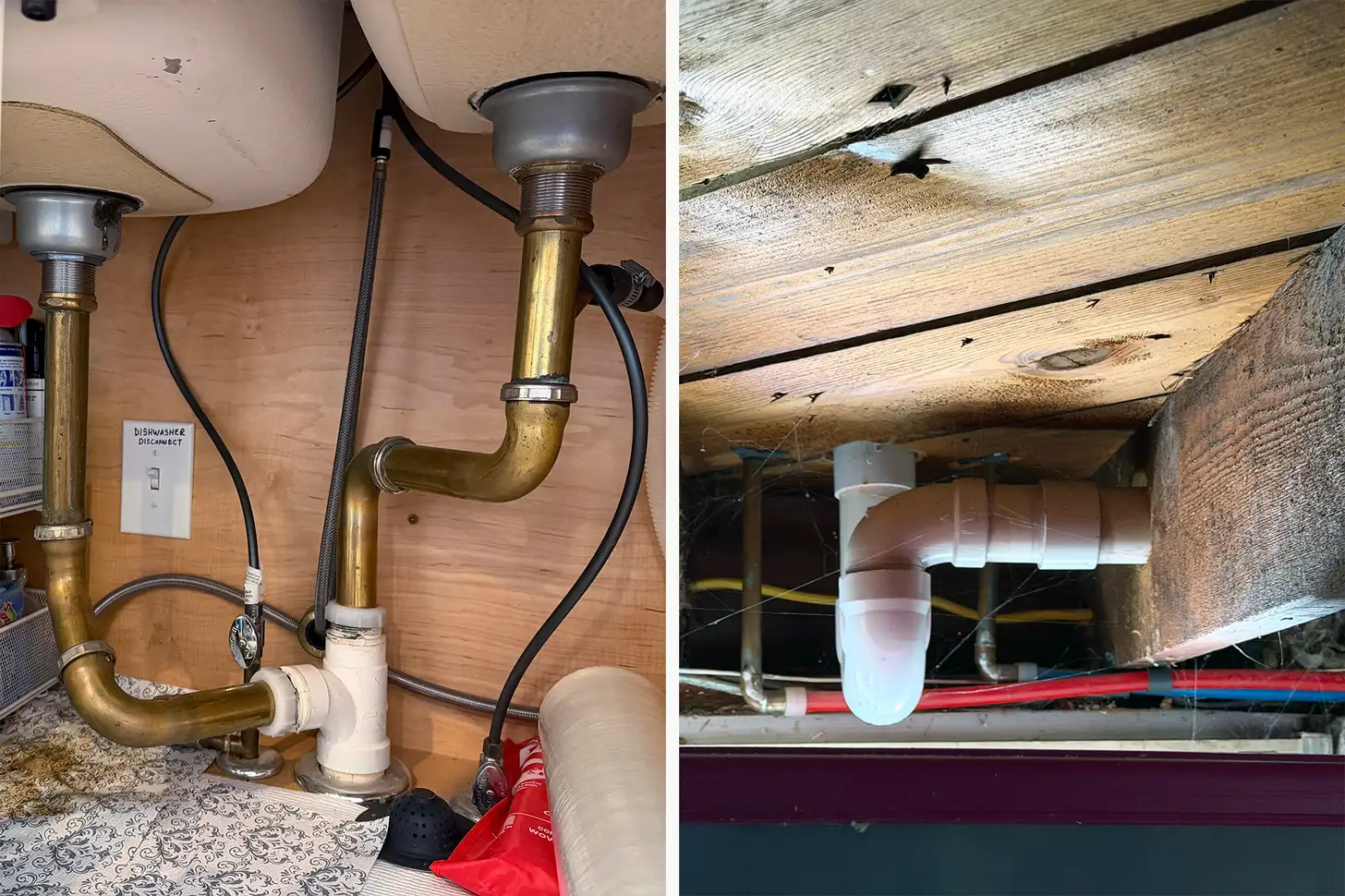
Plumbing systems often navigate complex geometries both inside cabinets and beneath your subfloor joists:
-
1
Continuous Waste & Dual Basins: As shown on the left, dual kitchen sinks share central waste tees and dishwasher lines. Any grease accumulation in these joints creates cross-drain backups into the adjoining bowl.
-
2
Subfloor Traps & Joist Penetrations: As shown on the right, tub and shower P-traps run between structural floor joists. If these inaccessible pipes crack or back up, water seeps into subflooring and ceilings below.
-
✓
Our Professional Method: We use specialized flexible camera snakes and sectional cable augers to clear deep into the branch lines from accessible cleanouts—never disturbing your floors or drywall.
What Causes Drain Clogs & Why Chemical Cleaners Fail
Drain blockages develop gradually over months. Hair, soap residue, grease, cooking fats, food debris, and mineral scale slowly reduce the diameter of your pipes. In older homes, shifting soil and invasive tree roots can also breach underground sewer lines.
The Hidden Danger of Chemical Cleaners
Commercial chemical drain cleaners rely on harsh acids or lye. They produce intense chemical reactions that melt PVC glue, crack porcelain, and corrode older cast iron pipes. Most critically, they only burn a small pinhole through the clog, leaving 90% of the sludge behind to clog again within days.
The Professional Advantage
Professional drain cleaning physically extracts the obstruction or scrubs the pipe walls clean to original factory diameter, eliminating the underlying buildup once and for all.
Our 4-Step Drain Cleaning Process
Diagnostic Inspection
We check the affected drain and insert high-definition fiber-optic video cameras if necessary to pinpoint the exact location and material of the blockage.
Targeted Mechanical Clearing
Depending on the clog, we deploy heavy-duty motorized augers with specialized cutting heads to slice through roots and solid obstructions without scratching pipes.
High-Pressure Hydro Jetting
For grease and scale buildup, we blast the line with up to 4,000 PSI of water, scouring the entire internal circumference of the pipe back to bare metal or PVC.
Flow Testing & Verification
We run full volume water tests across all connected fixtures to verify optimal drainage and ensure no hidden leaks or secondary blockages remain.
When Should You Call a Plumber?
You don't have to wait until a drain completely floods your home. Call our 24/7 team as soon as you notice:
Slow-Draining Water
Water takes minutes to leave sinks, showers, or tubs, indicating an expanding obstruction.
Gurgling Drain Sounds
Strange bubbling or gurgling noises caused by trapped air pockets inside partially blocked pipes.
Water Backing Up
Water appearing in the bathtub when flushing the toilet, or coming up floor drains during laundry cycles.
Persistent Odors
Unpleasant sewage or decaying organic odors wafting out of drains even after running water.
Recurring Clogs
Drains that clog repeatedly every few weeks despite using plungers or store-bought chemicals.
Multiple Slow Fixtures
When more than one drain is slow simultaneously, your main sewer line is likely compromised.
Drain Cleaning FAQs
Got questions about drain cleaning, hydro jetting, or emergency service? Here are answers from our licensed plumbers.
Early indicators of a drain blockage include sluggish water drainage in sinks, bathtubs, or showers, gurgling or bubbling sounds coming from pipes as air struggles to vent, standing pools of water around fixtures, and foul sewer or sulfuric odors. If multiple drains back up simultaneously, it usually points to a main sewer line clog requiring immediate professional service.
Bathroom clogs are primarily caused by hair, dead skin cells, and soap scum adhering to pop-up assemblies and P-traps. Kitchen drains choke on cooking fats, oils, grease, and fibrous food debris that solidify inside pipes. Mineral scale from hard water, flushed non-flushable wipes, and tree root intrusions into underground sewer lines are other leading culprits.
Professional drain cleaning is a comprehensive maintenance process that mechanically extracts both organic sludge (grease, hair, food debris) and inorganic scale (minerals, rust, tree roots) from inside plumbing pipes. It is necessary because neglected clogs increase hydrostatic pressure, degrade pipe walls, release hazardous sewer gases, and can cause catastrophic indoor wastewater backups.
No. Over-the-counter chemical drain openers are corrosive to your plumbing and dangerous to your health. Harsh acids and caustic lyes generate intense heat that can melt PVC fittings, crack porcelain, and deteriorate cast iron pipes. Furthermore, chemical cleaners usually only burn a small pinhole through standing sludge rather than scouring the pipe clean, causing the clog to return quickly.
Plumbers utilize advanced, pipe-safe technology matched to the specific obstruction. We start with high-definition fiber-optic camera inspections to locate and identify the clog. For solid obstructions and roots, we deploy heavy-duty motorized augers with specialized cutting heads. For grease, sludge, and scale buildup, we use high-pressure hydro jetting (up to 4,000 PSI) to scour pipe walls back to their original diameter.
We service all residential and commercial drainage lines, including kitchen sinks, garbage disposals, bathroom lavatories, bathtubs, walk-in showers, toilet waste lines, laundry standpipes, basement floor drains, outdoor patio drains, roof downspout storm lines, and municipal main sewer lateral pipes.
Our licensed plumber will first inspect the affected fixtures and run a video camera through the line if needed to diagnose the obstruction. Next, they will explain the recommended solution and clear the blockage using motorized snaking or hydro jetting. Finally, they perform a comprehensive flow test across connected fixtures to ensure optimal drainage and inspect pipe integrity for any underlying fractures or leaks.
Professional drain cleaning completely eliminates stubborn blockages, restores peak flow velocity, eradicates lingering sewer odors, and prevents recurring backups. By relieving strain on pipe joints and removing corrosive mineral buildup, regular professional cleaning also extends the operational lifespan of your entire plumbing system and protects your home against costly water damage.
Place mesh drain strainers over kitchen and bathroom drains to trap hair, food scraps, and debris. Never pour cooking oils, grease, or fats down the sink—dispose of them in the trash. Avoid flushing wipes, paper towels, or hygiene products, even if marketed as flushable. Periodically flushing drains with boiling water and baking soda also helps prevent grease from coating pipe walls.
For preventative maintenance, homeowners should schedule professional drain cleaning once every one to two years. If your property features mature trees near underground sewer runs, older cast iron pipes, or a large household with high fixture usage, annual preventative maintenance is recommended to prevent surprise backups.
Hydro jetting is safe and highly effective for most modern plumbing pipes in good condition, including PVC, ABS, and sound cast iron. However, our licensed plumbers always perform a digital camera inspection beforehand to assess pipe wall integrity, ensuring older, brittle, or cracked pipes are not exposed to high pressures without necessary repairs first.
A simple manual drain snake can be used for shallow hair clogs within the first couple of feet of a sink or shower P-trap. However, improper use can easily scratch fixture surfaces, puncture aged metal pipes, or get stuck in tight bends. For deeper blockages, main line clogs, or stubborn grease, professional motorized equipment operated by a licensed plumber is much safer.
We operate 24 hours a day, 7 days a week, 365 days a year with mobile service trucks stationed across the area. For urgent drain emergencies or sewage overflows, our licensed master plumbers typically arrive within 1 to 2 hours, fully equipped to resolve the issue on the spot.
Drain Cleaning & Clogs by Area
Choose your neighborhood for local 24/7 drain cleaning & clog removal:
More Ways We Help
Other Plumbing Services
Explore our full range of 24/7 emergency and residential plumbing services.
Get Your Drain Flowing Again
If you are dealing with slow drains, foul odors, or a complete sewage backup, our licensed master plumbers are ready to help immediately. Contact us to schedule fast, reliable drain cleaning and restore your peace of mind.